Wireless IoT Water Tank Level: Sensor and Indicator | Gateway and Data | Guides
Does a hydrostatic sensor work if the water density changes?
Only if you correct for the new density. Height is pressure divided by density and gravity, so a density change with no correction looks like a level change.
A wireless IoT water tank level monitoring setup is four choices written down before anyone buys a kit: the sensor (hydrostatic pressure, ultrasonic or radar), the power at the tank (mains, battery or solar), the link (LoRa, 4G or Wi-Fi), and how high and low alerts reach a person.
Here we discuss for Water as the liquid. Special Relative Density Algorithms can always be developed for Dairy / Juice / Oil / Other Liquids with different Viscosities, different Densities. Can check that out here.
Start with the tank:
- height, access, foam or silt, and whether 24 V DC already exists there.
- Pick the sensor from that list, then pick a link you can support on site.
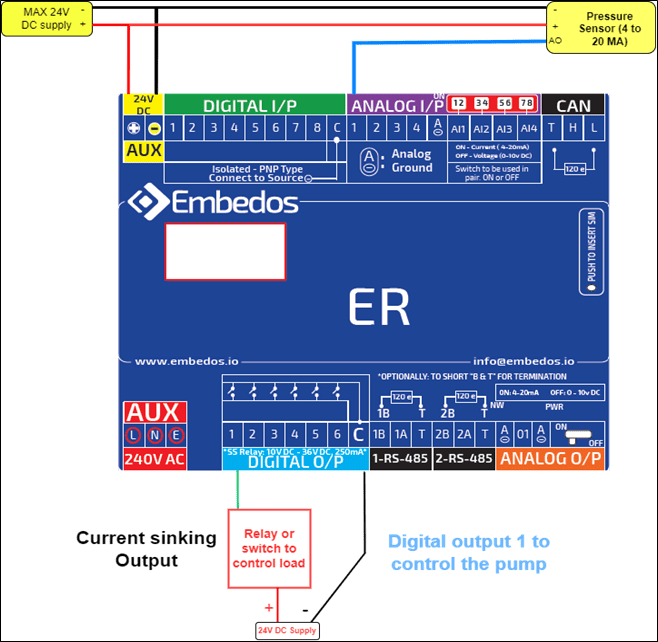
- A third-party level sensor with a 4-20 mA or 0-10 V output can then feed a gateway analog input.
Who this is for: facilities and plant engineers specifying level monitoring for overhead, underground, sump or process water tanks.
What the setup actually is
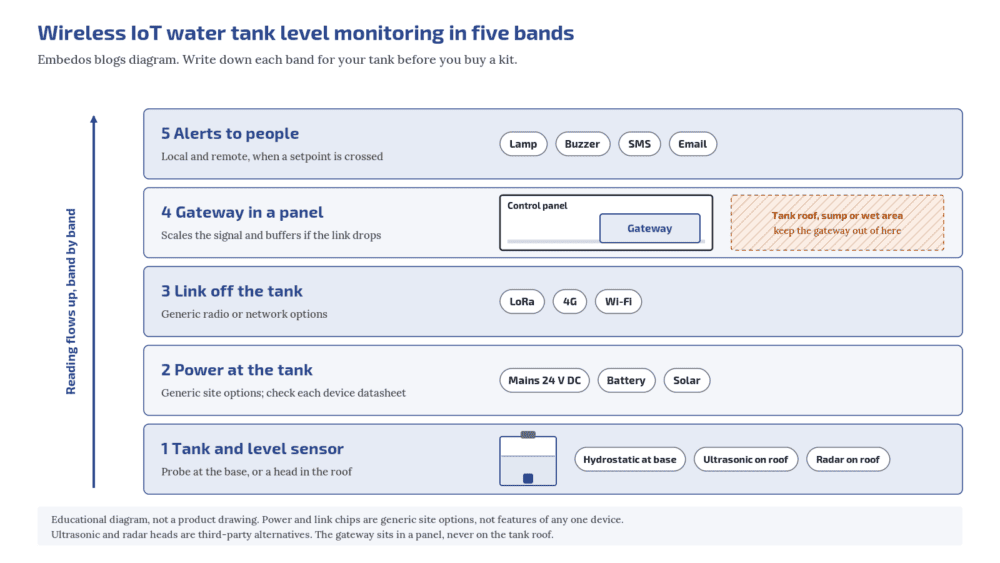
Every wireless tank level system has the same chain: A level sensor on or in the tank; power at that location; a link that carries the reading off the tank; a receiving device that scales the signal; and people, reached by a local lamp or buzzer and by a message when a setpoint is crossed.
LoRa, 4G and Wi-Fi are vendor-neutral link choices. Where LoRa is used, it is a third-party node talking to a third-party LoRaWAN gateway, not a feed into our hardware.
The first three items are site choices. Write them down before you compare dashboards.
Walk the tank and record the type and material, the height or usable range, whether anyone can enter for service, foam or silt, weather, and whether 24 V DC already exists there.
That list decides the sensor more than any catalogue page does.
Ultrasonic, hydrostatic or radar for a building water tank?
Hydrostatic when you can mount a probe and the density is known; ultrasonic on a calm surface if the blind zone is clear; radar when condensation or foam makes ultrasonic unreliable. In all three cases, take the output as 4-20 mA or 0-10 V into a gateway.
Choose hydrostatic when you can mount at the bottom and the density is known; ultrasonic on a calm surface when the blind zone is clear; radar when condensation or foam rules ultrasonic out.
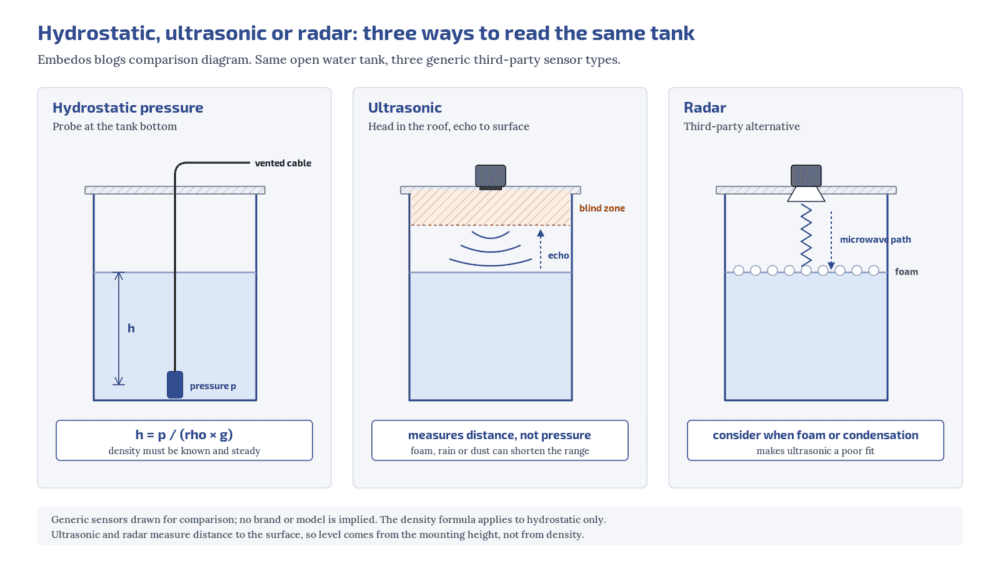
Hydrostatic, ultrasonic or radar
All three are third-party instruments. None of this assumes an Embedos sensor SKU.
The output you want, in most plants, is a 4-20 mA or 0-10 V signal into a gateway analog input. The 4-20 mA current loop is defined in IEC 60381-1 .
Its live zero is useful on a tank: a reading near 0 mA is a broken wire or a dead transmitter, not an empty tank. NAMUR NE 43 sets failure signal levels that let a system tell a sensor fault from a real level.
Ask whether the gateway flags those levels as faults instead of plotting them as data. Either could be true, depending on how you want to read this.
Hydrostatic pressure.
A pressure sensor at the tank bottom, or a submersible probe hung from the roof, measures the weight of the liquid column above it.
WIKA states the relationship for an open or vented tank as h = p / (ρ * g): height equals pressure divided by density and gravity.
A relative (gauge) sensor, often with a vented cable, cancels atmospheric pressure so the reading is only the liquid column.
Density must be known and reasonably steady; if it changes and you do not correct for it, the reported height moves even when the true level does not.
VEGA describes the same density dependence. WIKA’s rule of thumb, for a density of about 1,000 kg/m³, is that 1 bar relative corresponds to about 10 m of height. Treat that as a sizing check, not a calibration. Watch silt at the base. A sealed, pressurised tank needs a differential measurement (WIKA, sealed-vessel section).
Ultrasonic.
An ultrasonic level sensor sits in the roof and times the echo from the liquid surface.
Pepperl+Fuchs‘ ultrasonic technology guide mentions that colour and shine do not matter.
The same guide is the source for the limits that matter on a water tank:
A blind zone immediately in front of the face (the highest expected level must sit below it), a beam that spreads with distance, and a shorter range in heavy dust, rain or snow, and as air temperature and humidity rise.
It also notes that porous targets, such as foam rubber, reduce the operating range; surface foam on a liquid can absorb the echo in the same way, so trial it.
Ultrasonic proximity switches are covered by IEC 60947-5-2; for a continuous ultrasonic level transmitter.
If foam is common, or the air at the sensor swings widely in temperature, ultrasonic is often a poor first choice; Pepperl+Fuchs names air temperature as the biggest influence on accuracy.
Radar.
A radar level sensor also sits in the roof, but it times a microwave reflection rather than a sound pulse. Use it when condensation, foam or a busy surface makes ultrasonic a poor fit.
A VEGA for a liquid radar sensor describes measurement that is largely unaffected by product deposits and condensation on the sensor, and virtually unaffected by foam and condensate.
Those statements are VEGA’s, for that family. Do not copy a beam angle from one maker and treat it as a universal figure; read the blocking distance from the datasheet of the model you are buying. The hydrostatic density calculation does not apply, because radar measures distance, not pressure.
Choose hydrostatic when you can mount at the bottom and the density is known; ultrasonic on a calm surface when the blind zone is clear; radar when condensation or foam rules ultrasonic out.
The link, kept vendor-neutral
LoRa, 4G and Wi-Fi are three ways to get a reading off the tank. This comparison is general engineering guidance. It does not add a long-range radio, or a battery-life figure, to any product in our catalogue.
LoRa is a long-range, low-power radio physical layer, described by Semtech, which developed it. On plant and building sites it is often used with LoRaWAN, the network protocol whose specifications are published by the LoRa Alliance.
A typical pattern is a third-party node at the tank talking to a third-party LoRaWAN gateway.
Check distance and line of sight to that third-party gateway before you commit, and write down who maintains it. Do not treat that radio path as a feed into our hardware.
4G or LTE is a cellular wide-area link.
It needs a SIM, a data plan, and actual coverage at the tank. It is often the right choice when the tank sits away from the building network.
Write down who pays for the SIM and what happens when the plan expires.
Wi-Fi is the IEEE 802.11 family of wireless local-area networks, maintained by the IEEE 802.11 working group (IEEE 802.11 Working Group).
It is the simplest option when a reliable SSID already reaches the tank and IT will approve the device, and the wrong option when the tank is in a basement, behind concrete, or outside the building’s wireless plan.
Bring IT in before the purchase order.
Power at the tank, also vendor-neutral
Power is a site fact, not a product slogan.
Three patterns are common, and this list does not attribute battery, solar or low-power operation to any Embedos device.
Mains or 24 V DC at the tank is the cleanest option if a supply already exists, or if you can run a cable once.
Battery is used on many stand-alone tank nodes; write down how the pack is changed, who does it, and how you are told that the voltage is low.
Solar with a chargeable pack is used on remote or rooftop tanks with no mains; check shade through the day and a way to know that the pack is not charging.
In both cases the node is a site choice, not a feed into our hardware. If you already have 24 V at the tank, use it.
Setpoints, local indication and alerts
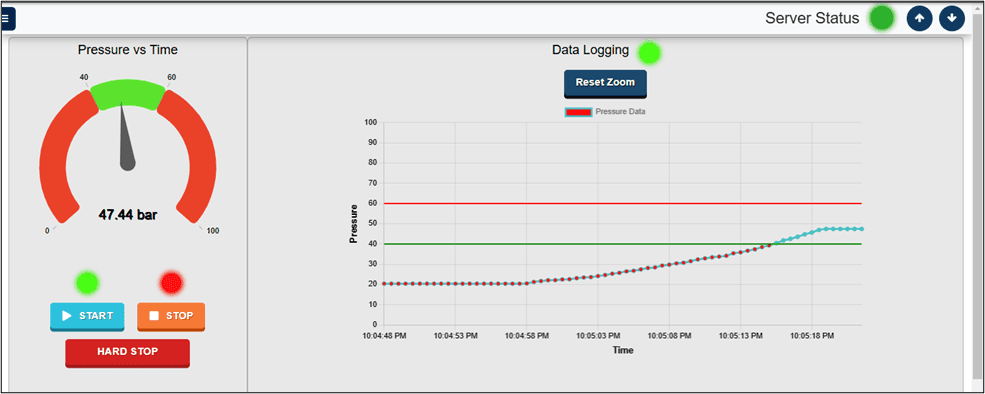
For each tank, write a high and a low setpoint, and what should happen at each. A local lamp and buzzer still matter when the radio is down. The Bose (EB) tank level application is described under Where Embedos fits, including the local relay lamp and buzzer.
If an ultrasonic or radar distance sensor is used instead of a hydrostatic probe, the relative-density calculation does not apply, because density is derived from pressure.
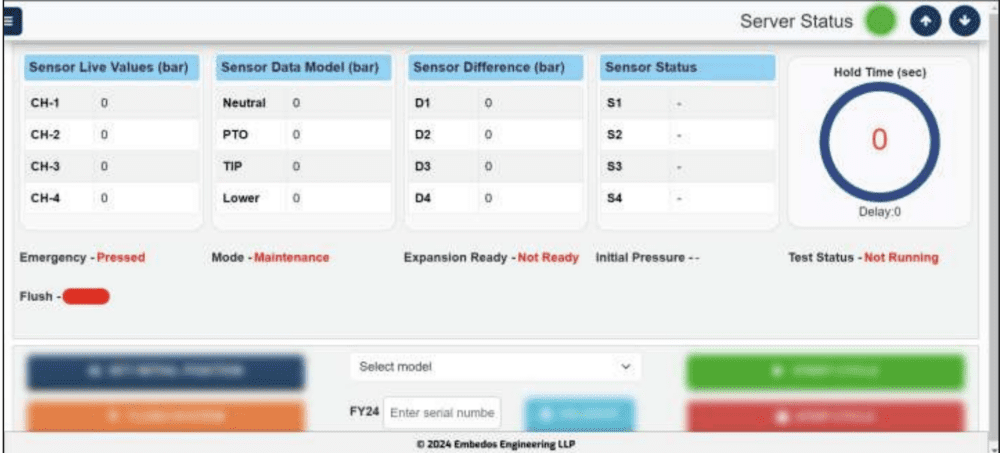
SMS and email alerts can be raised through EmView or from specific Embedos Hardware devices directly from teh shop floor, when a threshold is crossed.
Call alerts are also available. Add a delay or a deadband, and name who acts and who is next if nobody acknowledges. ISA-18.2 covers alarm management in process plants; every alarm needs a defined response, or it should not exist.
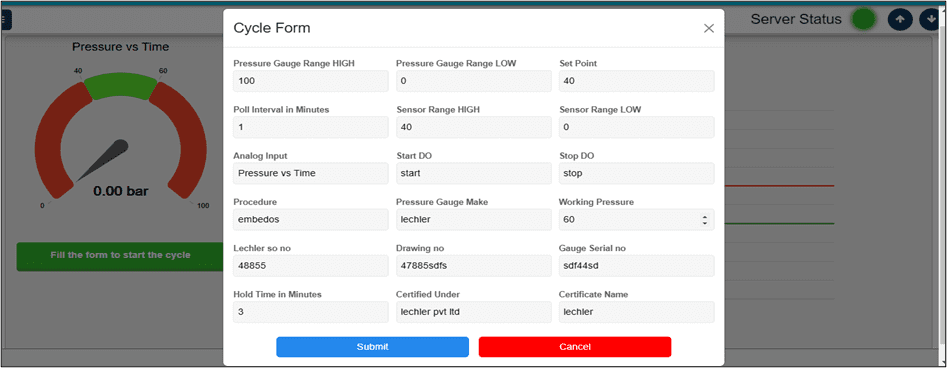
If the sensor is 4-20 mA, write the scaling: level in metres = (mA – 4) / 16 x span.
Our 4-20 mA loop scaling calculator will do the arithmetic. Agree that acceptance is one fill or empty cycle checked against a dip tape or a sight glass, and write down who owns the data.
What if the tank has no power?
A battery or solar pack can power a third-party node at the tank, provided you can reach it for service. That node is a stand-alone site arrangement, not a feed into our hardware. If you can run 24 V DC once, that is usually the more maintainable path.
Wireless IoT water tank level checklist
| Area | What to ask or check | Red flag |
|---|---|---|
| Tank | Type, height, access, liquid, foam or silt recorded | Kit quoted with no sketch |
| Hydrostatic | Density known; vented or gauge type agreed; silt considered | Density assumed, never checked |
| Ultrasonic | Blind zone shorter than the highest level; foam and air temperature checked | No blind-zone figure from the datasheet |
| Radar | Used when foam or condensation rules ultrasonic out; blocking distance from that model’s datasheet | A beam angle copied from another maker |
| Output | 4-20 mA or 0-10 V into a gateway analog input; NE 43 faults flagged | 0 mA plotted as an empty tank |
| Link | LoRa, 4G or Wi-Fi chosen with a written reason; coverage checked on site | Radio chosen before the tank is walked |
| Power | Mains 24 V, battery or solar recorded; pack-change access agreed | Battery specified with no access path |
| Buffering | Local log if the link drops | History that only exists while the radio is up |
| Alerts | High and low setpoints; local lamp or buzzer; who is notified next | Every ripple sends a message |
| Acceptance | One fill or empty cycle checked against a dip or sight glass | Dashboard screenshot as the only proof |
| Ownership | Plant or society owns the data; export path in the order | Silent contract on exit |
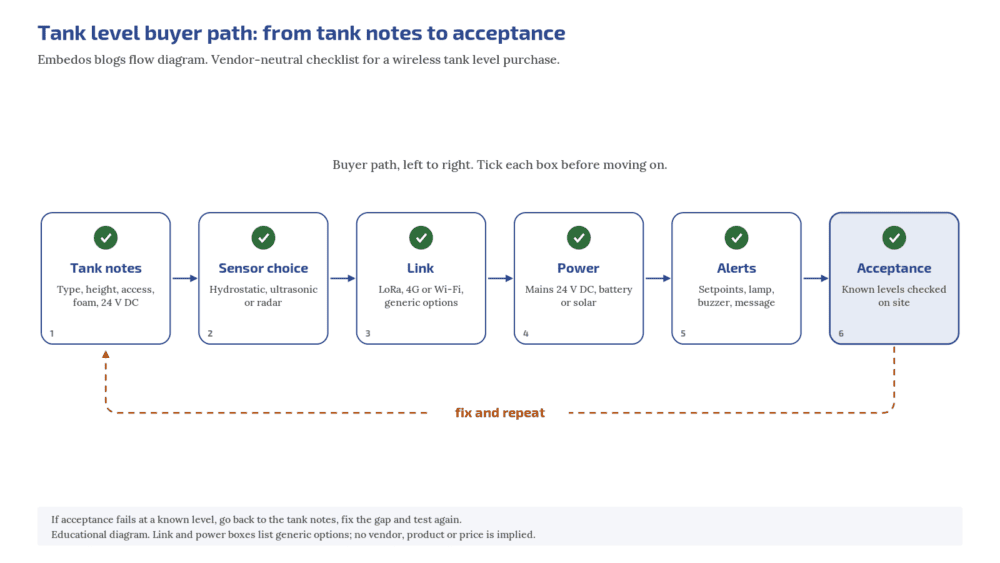
Can I use LoRa, 4G and Wi-Fi on the same project?
You can mix them across tanks, but each tank should have one primary link and a written reason. Check line of sight for LoRa, SIM coverage for 4G, and SSID reach plus IT approval for Wi-Fi, at the tank itself.
Where Embedos fits
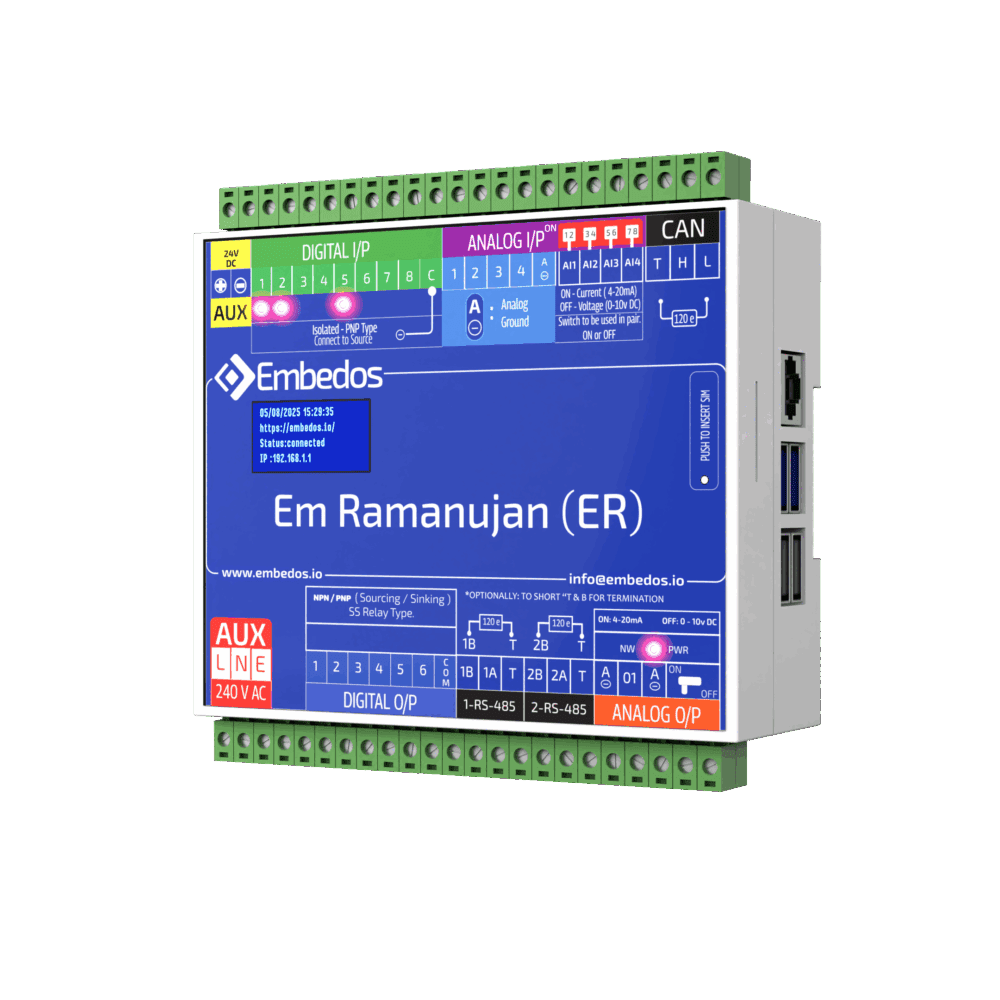
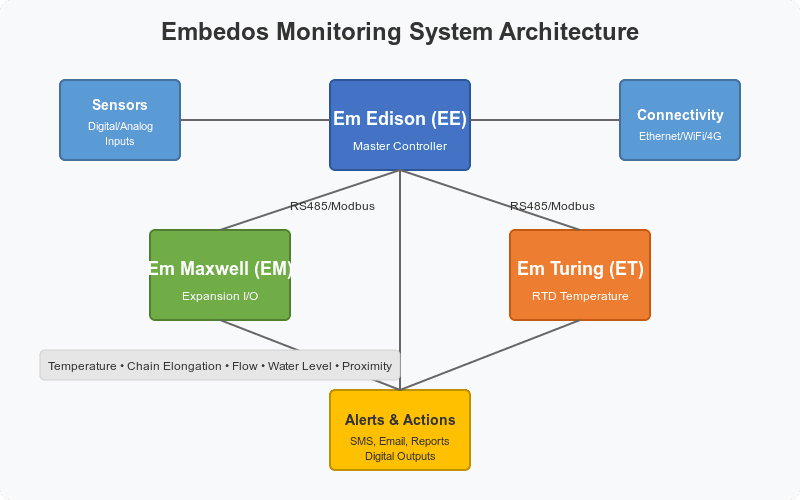
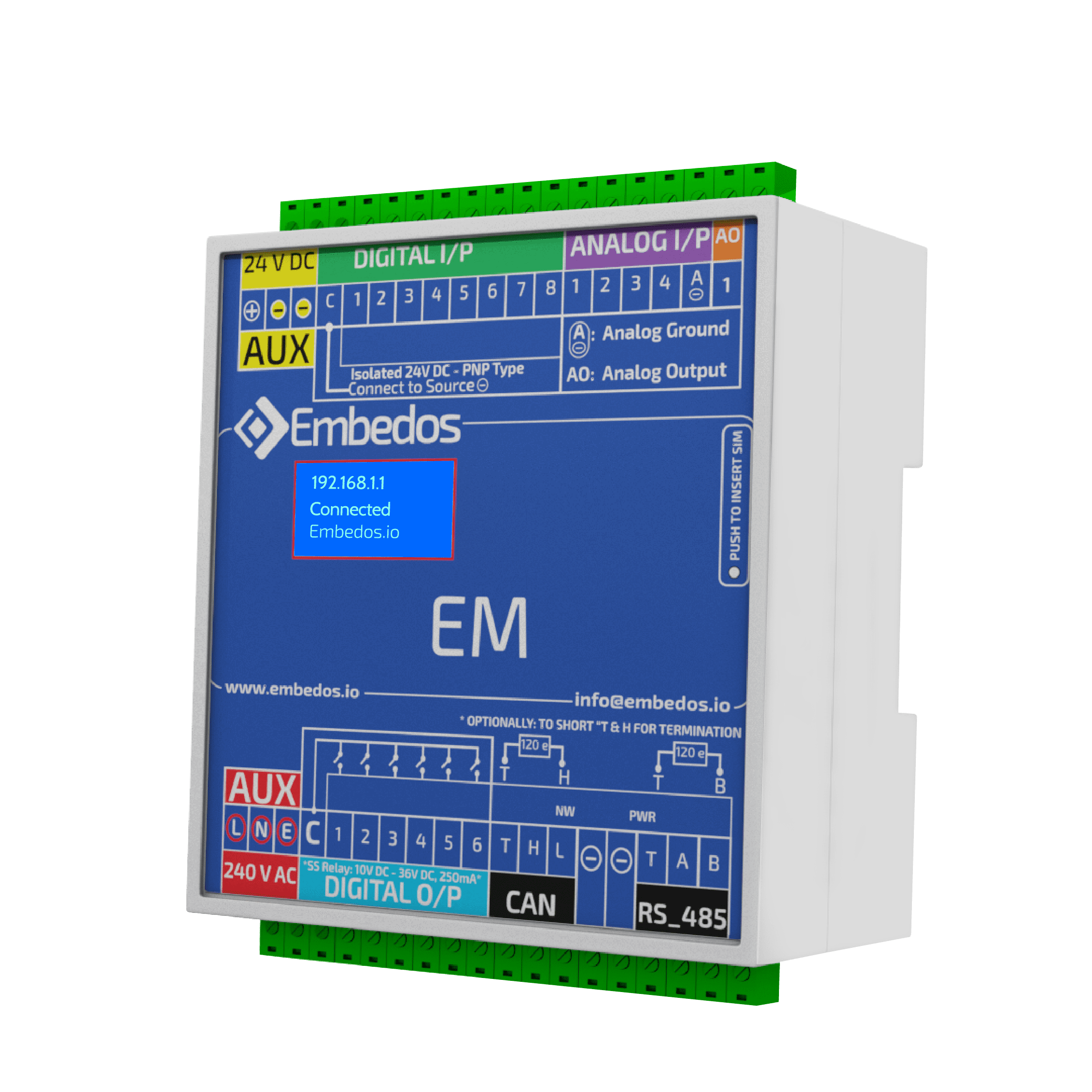
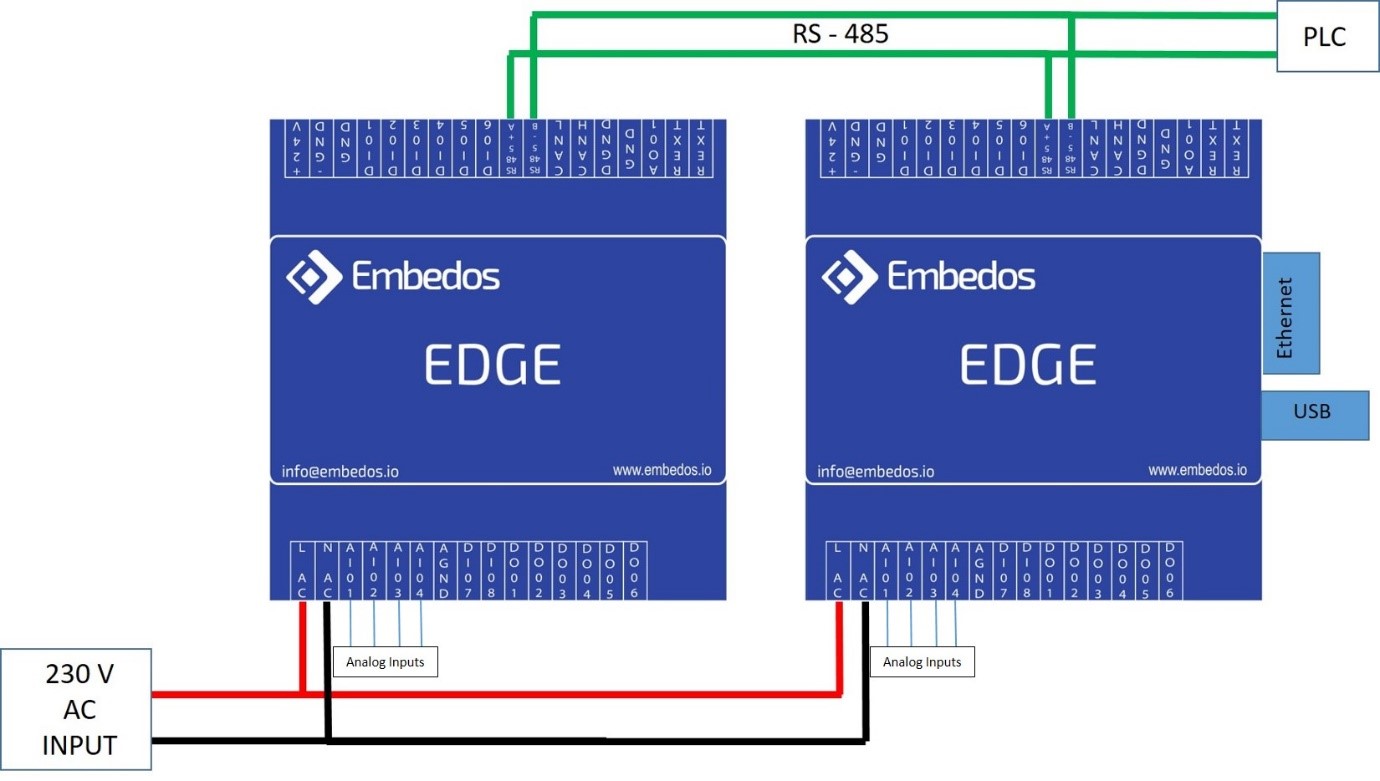
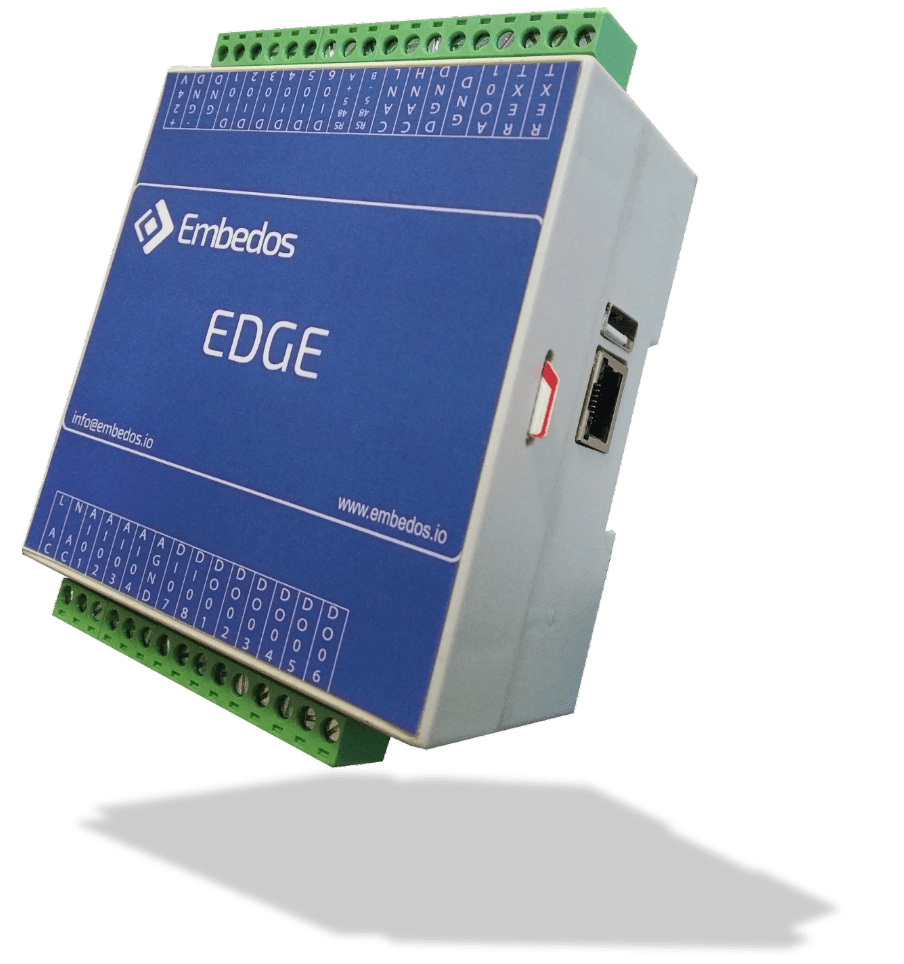
Embedos Edge is our platform for the gateway layer. A third-party hydrostatic, ultrasonic or radar level sensor with a 4-20 mA or 0-10 V output can be wired to an analog input on an Edge device.
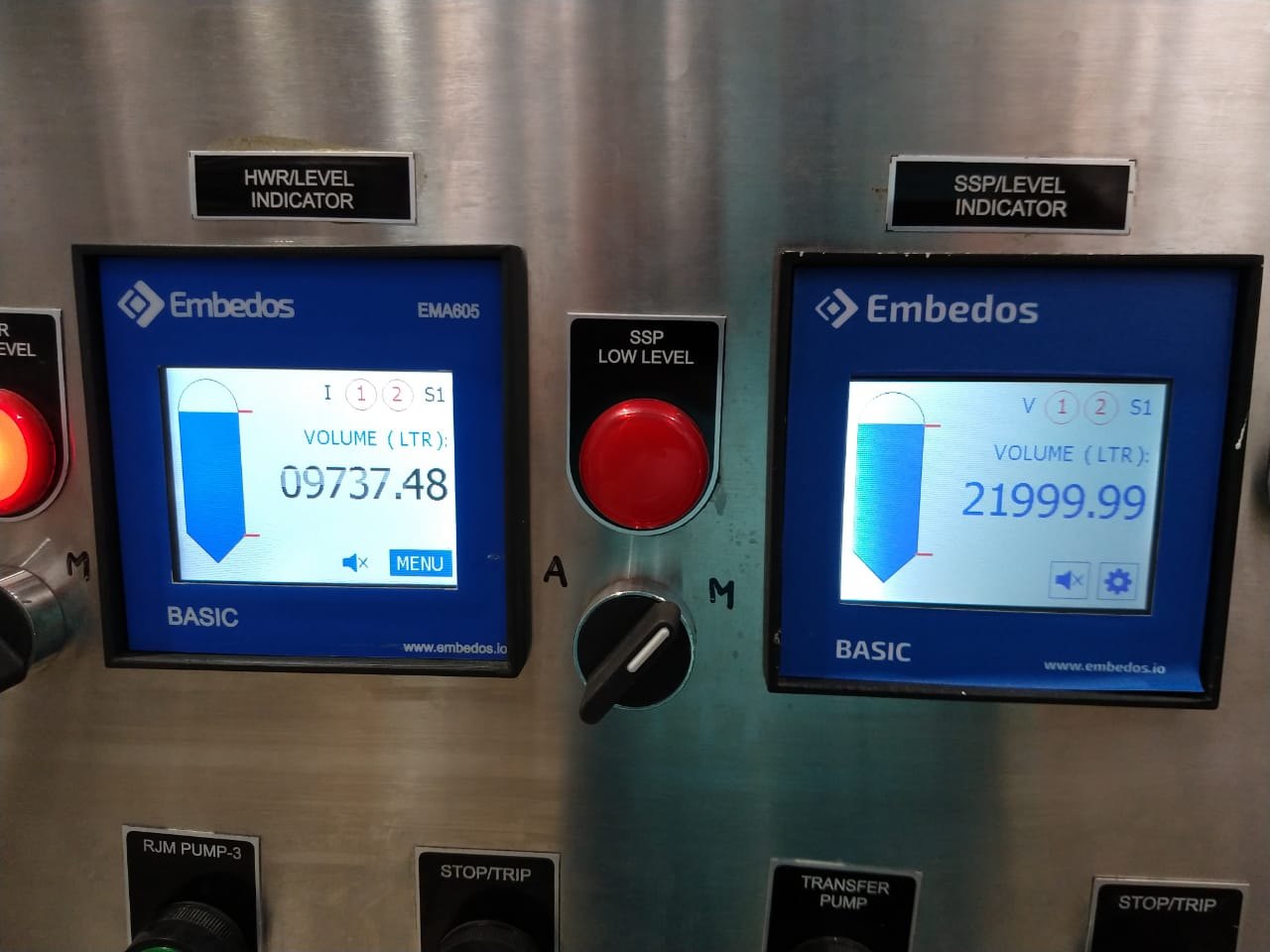
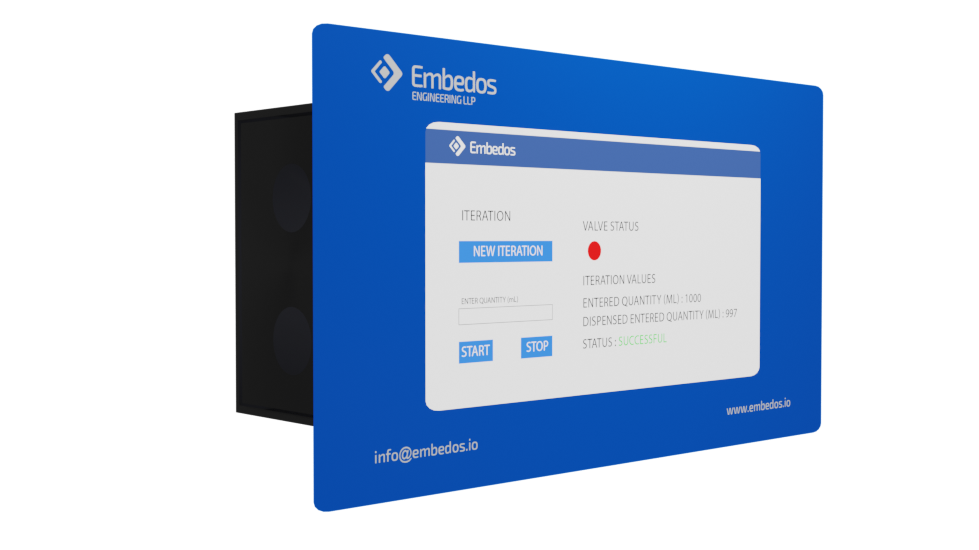
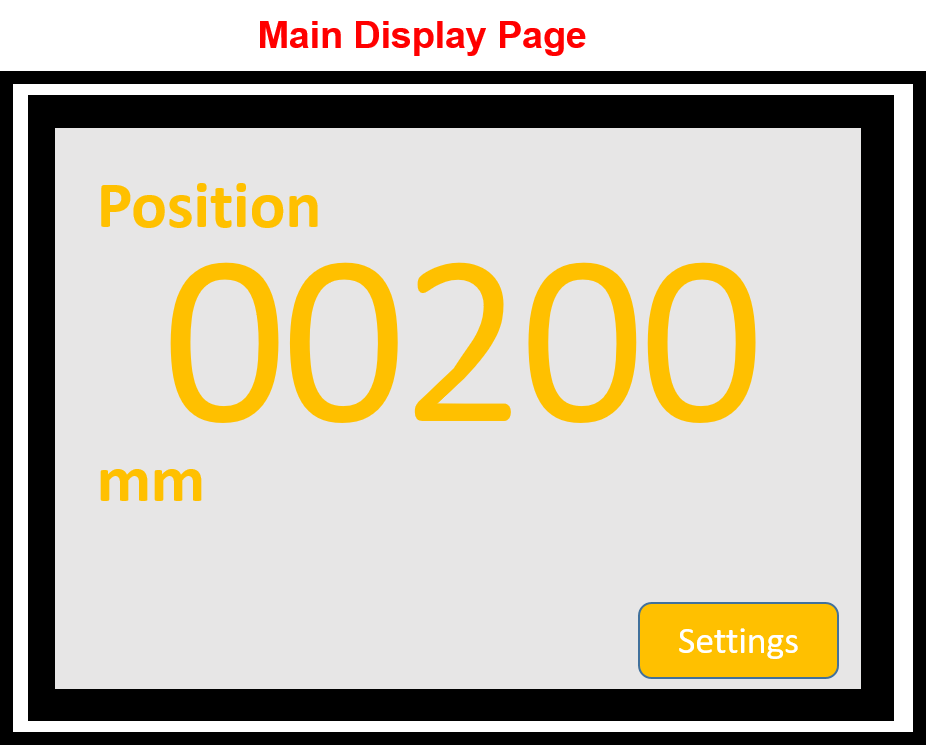
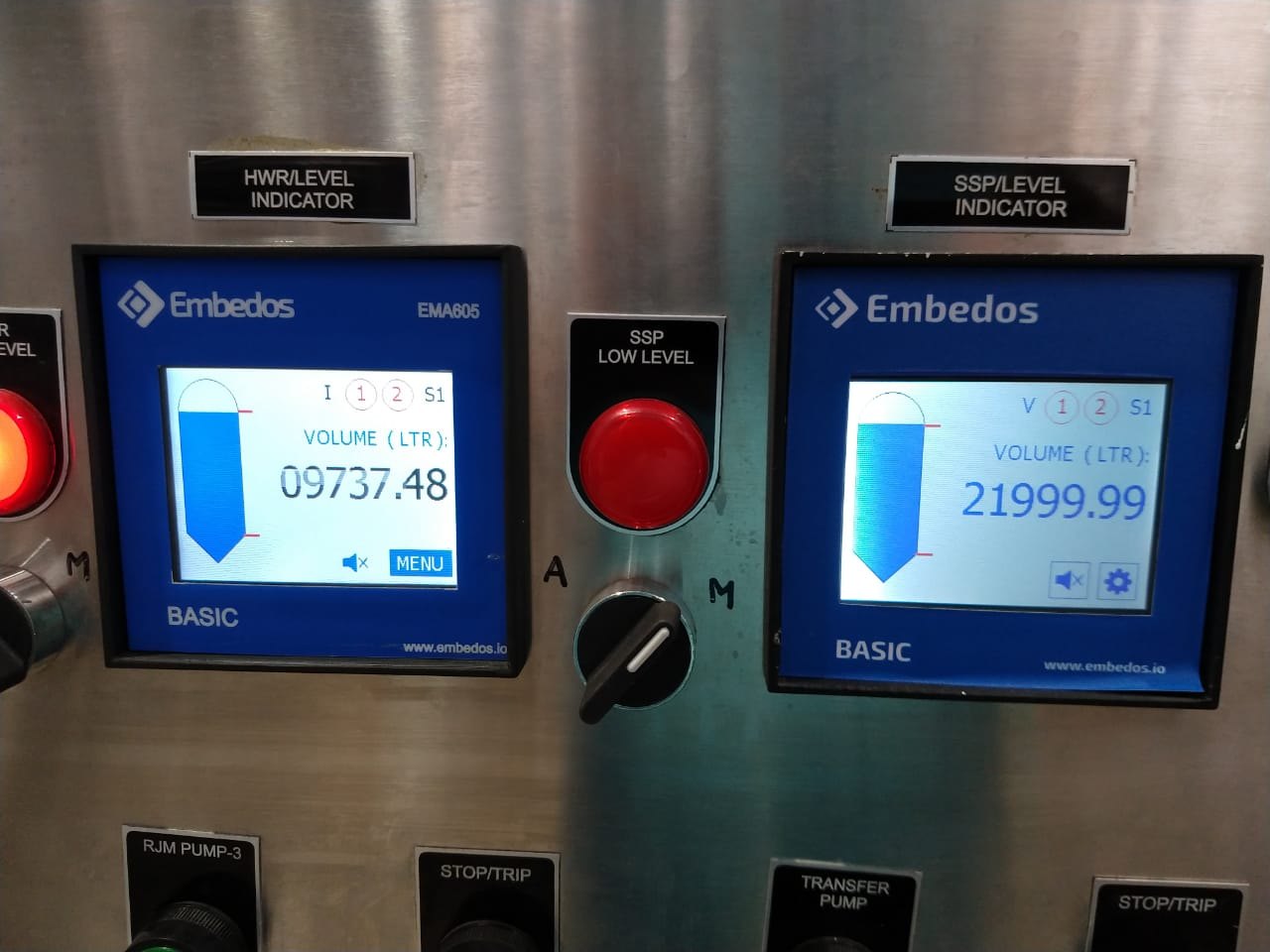
The Bose (EB) tank level application uses a ultrasonic sensor at the tank bottom to display level and volume for a liquid of any density, drives a local relay lamp and buzzer on a setpoint, and uses Wi-Fi with OTA updates.
If the tank is away from the building Wi-Fi, 4G is available as an option on Maxwell (EM). SMS, email and call alerts can be raised through EmView.
Download the Free “Wireless IoT Water Tank Level Checklist”
Enter your email and the form emails you the copy link to the Google Sheet.
How should high and low alerts be raised?
Set the two levels in writing. Use a local lamp and buzzer, and send SMS or email (and a call, if you use that path) to a named person, with a delay so a ripple does not become a flood of messages.
Next step! Send us a Mail
Send us the stroke, the resolution and speed you need, how the sensor will be mounted (in a cylinder, on a profile or with a wire), the conditions at the sensor head and the input your PLC accepts.
Help Us Help You Leverage The Power Of Industrial Automation & Industrial IoT - IIoT.