







An Era of MicroMobility during the 4th Industrial Revolution!

IoT (Internet of Things) cellular connectivity has played a significant role in the rise of micromobility, which refers to small, lightweight vehicles designed for short trips. These vehicles include electric scooters, bikes, and other modes of transportation that are smaller and more agile than traditional cars.

One of the key ways that IoT cellular connectivity has enabled the rise of micromobility is by providing a means of communication between the vehicle and the internet.

This allows for real-time tracking and monitoring of the vehicle’s location, usage, and maintenance needs, as well as enabling features such as remote locking and unlocking, and the ability to pay for rides using a smartphone app.

#iot cellular connectivity has also made it possible for micromobility companies to offer services such as shared scooter fleets, where users can locate and unlock a nearby scooter using their smartphone. This has made it much easier and more convenient for people to use micromobility vehicles for short trips, which has contributed to their popularity.

The move to remote and hybrid work, as well as rising gas prices, may have contributed to the growth of the #micromobility industry. As more people are working remotely or on a hybrid basis, there is likely to be an increased need for convenient and efficient ways to travel short distances, such as for commuting or running errands.

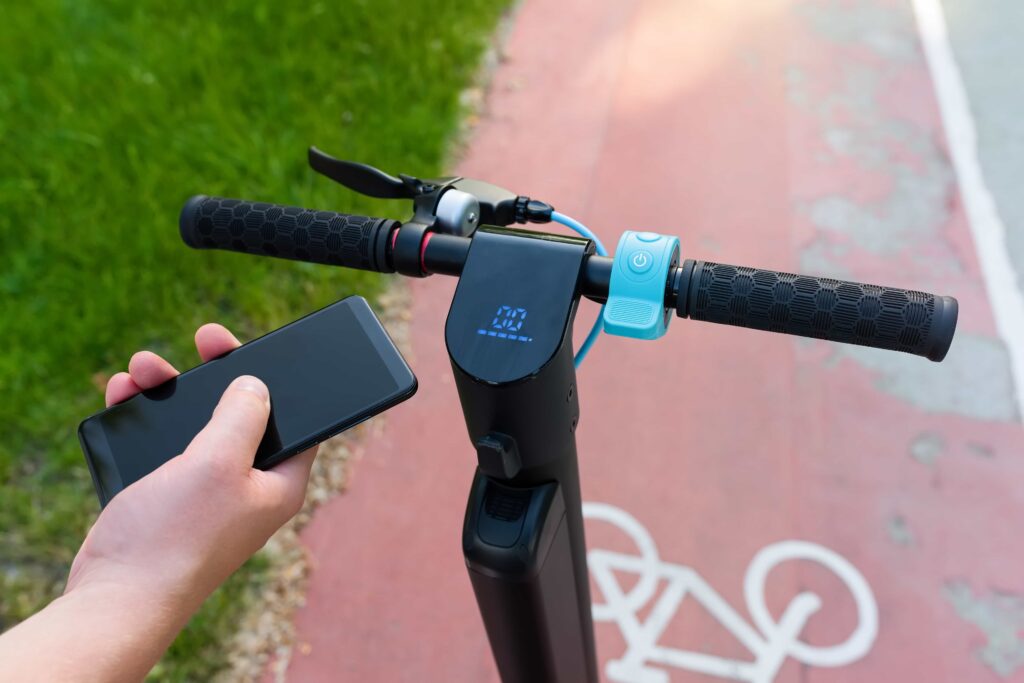
Embedos_phone-hand-man-using-ecological-transport-scooter-bicycle-road-park

As the micromobility industry continues to grow, there is likely to be a focus on innovations in safety, accessibility, and cost-efficiency, as well as the use of technologies such as AI, computer vision, and sensors. These technologies can help to improve the performance and safety of micromobility vehicles, as well as make them more convenient and accessible for users.


The use of multi-carrier networks and eUICC (Embedded Universal Integrated Circuit Card) technology has helped to improve the connectivity and tracking of micromobility vehicles, such as electric bikes and scooters.

In the past, the coverage limitations of any one mobile carrier made it challenging to connect and track these types of vehicles. However, the shift towards multi-carrier networks has made it possible to achieve more reliable and extensive connectivity, even in areas where the coverage of a single carrier may be limited.

Embedos_woman-using-app-smartphone-unlock-electric-bike-street-driving-ecology-transportation

eUICC technology has also made it easier to deploy and manage fleets of micromobility vehicles, as it allows for the easy switching of carriers and the creation of a centralized dashboard for managing and tracking the vehicles.

For consumers, the use of multi-carrier networks and eUICC technology has made it more affordable to use micromobility vehicles, as it has helped to lower the cost of connectivity.

In addition, the use of these technologies has helped to reduce carbon emissions and the environmental impact of micromobility, which is especially important in the context of the global climate crisis.

The use of platforms that provide multi-carrier connectivity via a single SIM card can make it easier for micromobility companies to deploy their fleets in new markets.

This is because it allows them to avoid the need to deploy multiple SIM cards per device or navigate the complex array of mobile network providers in each market. Instead, they can rely on a single SIM card to provide connectivity across multiple carriers, which can be especially useful in markets where the coverage of a single carrier may be limited.

In addition, the use of these platforms can help micromobility companies to deploy their fleets more rapidly into new markets, thanks to features such as prototype testing and the ability to automatically optimize SIM cards for activation at the right time.

This can be especially useful in cities, where coverage reliability can vary even by neighborhood.

Finally, some platforms may offer pilot programs that can help companies study the total cost of ownership and project ROI in advance of full rollouts.

 Embedos_young-businessman-with-electric-scooter-standing-front-modern-business-building

This can be helpful for companies looking to expand into new markets, as it allows them to test the viability of their business model and assess the potential return on their investment.


The low cost of e-scooter and e-bike rental has made micromobility vehicles more affordable and accessible for many people, particularly in dense city centers and lower-income areas.

These vehicles provide an alternative to traditional modes of transportation, such as cars, and can be especially useful for commuters who can dock or park them at charging stations, avoiding the need to pay for parking or taxi fees.

The use of multi-carrier connectivity can also help to improve the affordability of micromobility for both consumers and companies. By relying on a multi-carrier approach, micromobility companies can avoid the need to pay for multiple SIM cards or negotiate with multiple mobile network providers, which can help to reduce costs.

In addition, some multi-carrier IoT connectivity providers offer pay-as-you-go services or more appropriate pricing models for organizations with low data usage needs, such as micromobility companies.

The use of multi-carrier connectivity can help to improve the efficiency of micromobility fleets by enabling real-time tracking and monitoring of the vehicles.

This can help to reduce fuel costs associated with retrieving disabled vehicles and enable a quicker return to service, which can help to preserve revenue for the company.

Embedos_electric-scooter-edge-sidewalk-covered-with-autumn-leaves-by-wooden-fence

By providing micromobility fleet managers with dashboards that offer real-time tracking and monitoring of the vehicles, it is possible to improve the lifespan of the fleet through easy-to-access diagnostics, location monitoring, data usage, and device usage. This can help to reduce the risk of misuse and improve the overall usability of the vehicles.


In addition, APIs can help to facilitate integration with other systems and platforms, such as payment systems and transportation networks.

Achieving constant IoT connectivity can be especially helpful for start-ups in the micromobility space, as it can allow them to focus more on innovations and less on troubleshooting and administrative work.

By using an IoT cellular connectivity platform that offers reliable and extensive coverage, these companies can reduce the amount of time and effort they need to spend on maintaining and managing their connectivity.

In addition, the use of API connections and integrations can help to ensure seamless reporting within the enterprise systems that micromobility companies prefer.

This can make it easier for these companies to track and monitor their fleets and access the data they need to make informed business decisions.

Overall, the use of IoT cellular connectivity and API connections can help to improve the efficiency and effectiveness of micromobility companies, enabling them to focus on developing and improving their products and services.


There are several steps that micromobility companies can take to future-proof their businesses:

  1. Invest in technology: By investing in technology such as AI, computer vision, and sensors, micromobility companies can improve the performance and safety of their vehicles, as well as offer new and innovative features to users.
  2. Build a strong brand: A strong brand can help micromobility companies to differentiate themselves from competitors and build customer loyalty.
  3. Focus on sustainability: As concerns about the environment continue to grow, it will be important for micromobility companies to focus on sustainability and reduce their carbon footprint. This can include using renewable energy sources to power their vehicles and adopting eco-friendly business practices.
  4. Foster partnerships: Building partnerships with other companies and organizations can help micromobility companies to expand their reach and access new markets.
  5. Stay up to date: By staying up to date with industry trends and developments, micromobility companies can ensure that they are well-positioned to take advantage of new opportunities as they arise.

Embedos_electric-scooters-stand-street-against-background-city

IoT cellular connectivity platforms have played a key role in enabling the expansion of the micromobility – E scooter industry. These platforms provide reliable, transparent, and flexible connectivity that can help micromobility companies to quickly bounce back from disruptions such as the COVID-19 pandemic.

By providing an easy-to-use and cost-effective means of connecting and tracking their vehicles, these platforms have made it possible for micromobility companies to deploy their fleets nearly anywhere in the world.

In addition, the use of real-time dashboards and other monitoring tools can help micromobility companies to be more proactive in managing their fleets and mitigating issues before they arise.

This can help to improve the efficiency and reliability of the vehicles, as well as provide live reporting metrics that can be accessed from anywhere in the world. Overall, IoT cellular connectivity platforms have played a vital role in enabling the growth and expansion of the micromobility industry.

The affordability and environmental benefits of micromobility vehicles have likely contributed to the growth of the industry and the increasing demand for these types of solutions.

Many people are seeking out convenient and efficient ways to travel short distances, and micromobility vehicles such as electric scooters and bikes offer an attractive alternative to traditional modes of transportation.

To achieve industry goals around micromobility access and ubiquity, it will be important for providers to prioritize constant connectivity and use technologies such as eSIMs (embedded SIM cards) to access multi-network cellular coverage.

By using a single eSIM to access multiple networks, micromobility companies can ensure that their vehicles have reliable connectivity in a wide range of locations, which can help to improve the user experience and will definitely increase popularity of these vehicles.


Looking for End to End Industrial Automation & IoT Solutions? 


Our Experts Want to speak to You!

Read More

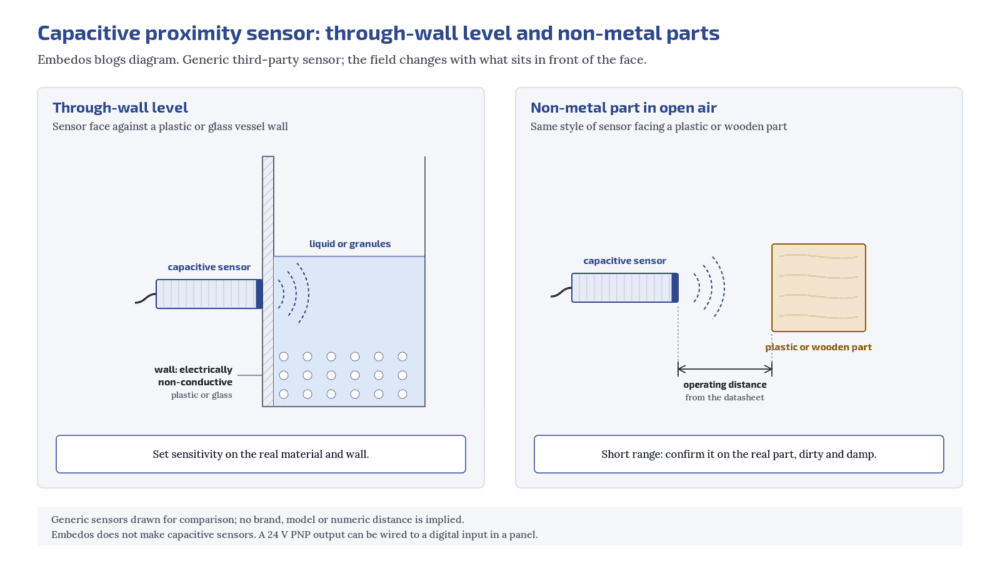
embedos-blogs-capacitive-embedos-level-non-metal: Embedos blogs diagram of a capacitive proximity sensor used for through-wall level and for a non-metal part in open air

Capacitive Proximity Sensor: Level and Non-Metal Distinction | Flush vs Non Flush | Guide

A capacitive proximity sensor is the right choice when the target is not a job for an inductive sensor: a liquid, a powder, a granule, or a non-metal solid such as plastic, wood or glass.
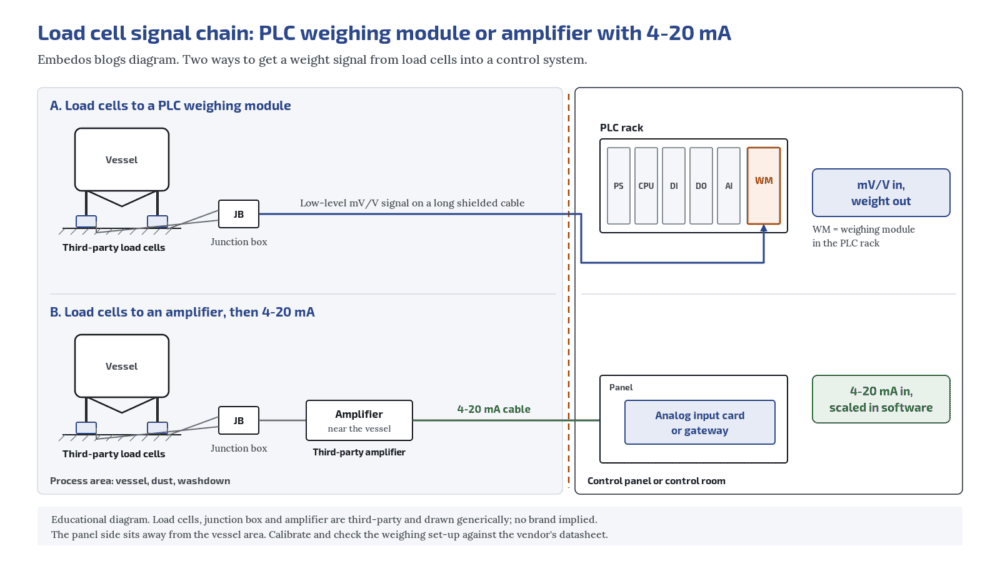
embedos-blogs-load-cell-embedos-signal-chain: Embedos blogs diagram comparing a load cell wired to a PLC weighing module with a load cell wired to an amplifier that sends 4-20 mA to a standard analog input

Load Cell Weighing Module for PLC: Buyer Guide

Load Cell Weighing Module for PLC: with Embedos.
PLC weighing module vs load cell amplifier with 4-20 mA vs edge logging: calibration, noise, excitation and how to choose for tank or batch weighing.

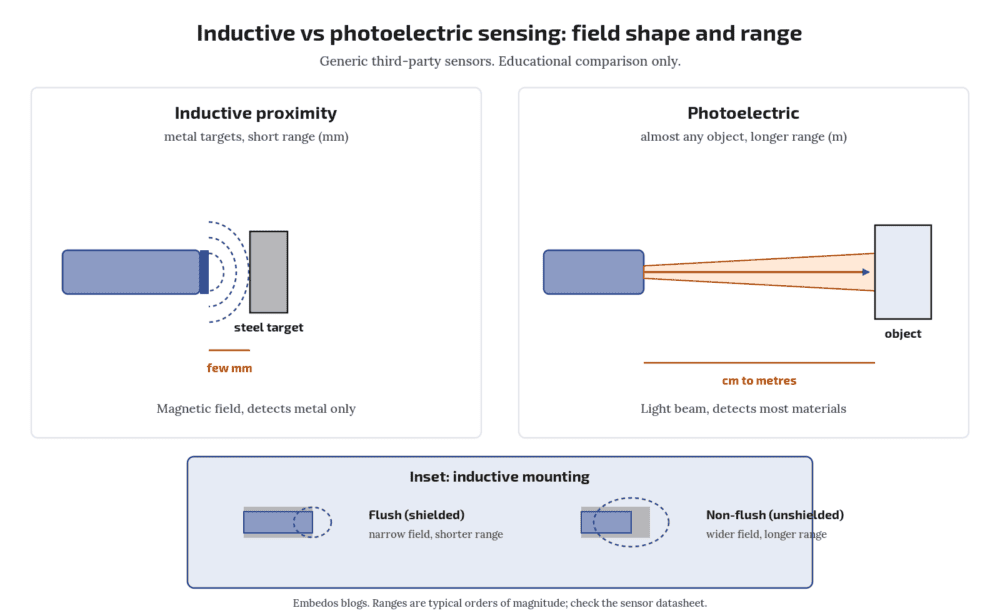
Embedos blogs embedos-blogs diagram: inductive sensor field detecting a steel target at short range versus photoelectric beam detecting an object at longer range

Inductive vs Photoelectric Sensor: Plant Selection Guide by Embedos Mumbai!

Inductive vs photoelectric Sensors. In proximity sensors for steel and power plants: Target, Flush vs Non-flush, 3-wire PNP/NPN, IP65 and dust checks. What to look for before purchasing?

When a timezone setting becomes a root shell: Four OT edge lessons in Cyber Security to learn in Industrial Automation

Four OT edge lessons from October 2026 CISA ICS advisories: timezone-to-shell, localhost bypass, Linux runtimes on controllers, and pollers without peer identity checks.

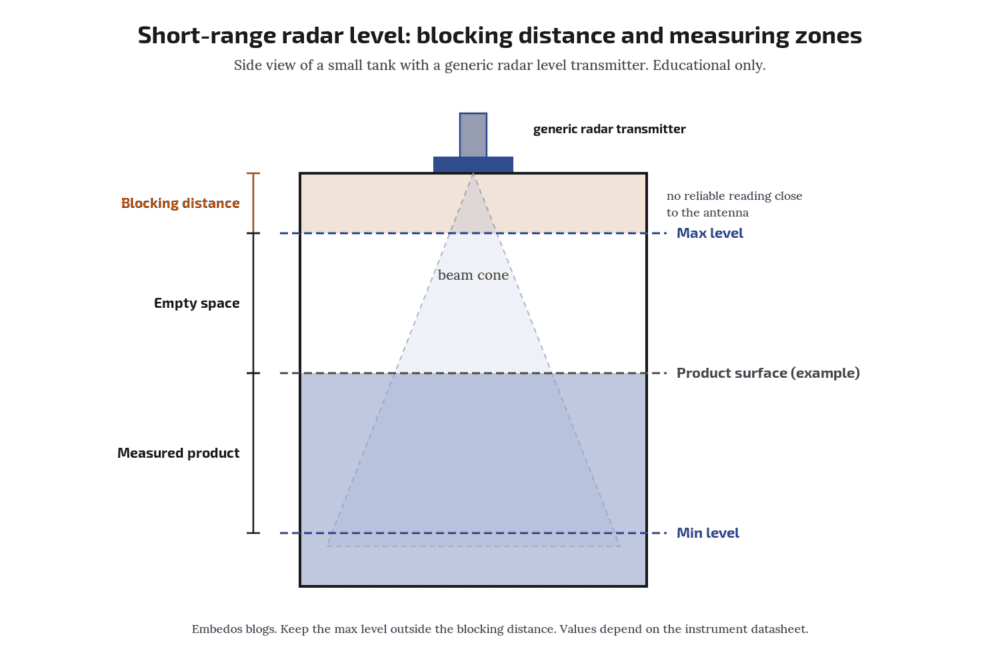
Embedos blogs embedos-blogs diagram: radar level transmitter on a small tank showing blocking distance, maximum level, minimum level and beam cone

Short-Range Radar Level Transmitter: Picking for 0.1-1.6 m

For a short range radar level transmitter on a vessel where the liquid sits 100 mm to 1600 mm below the flange, the spec that decides everything is the blocking distance (also called dead band or near-range limit).

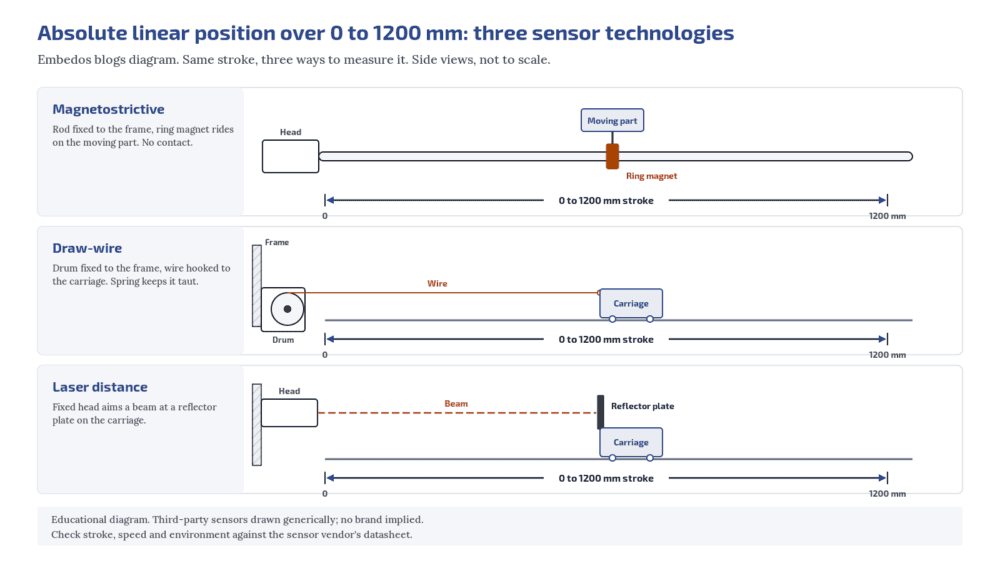
embedos-blogs-linear-position-embedos-technologies: Embedos blogs diagram comparing magnetostrictive, draw-wire and laser distance sensors measuring a 0 to 1200 mm stroke

Absolute Linear Position Sensor: 0-1200 mm | magnetostrictive vs laser vs lvdt vs draw wire |Guide

Choosing an absolute linear position sensor for 0-1200 mm: magnetostrictive vs draw-wire vs laser, SSI or digital vs 4-20 mA, stroke and mounting.

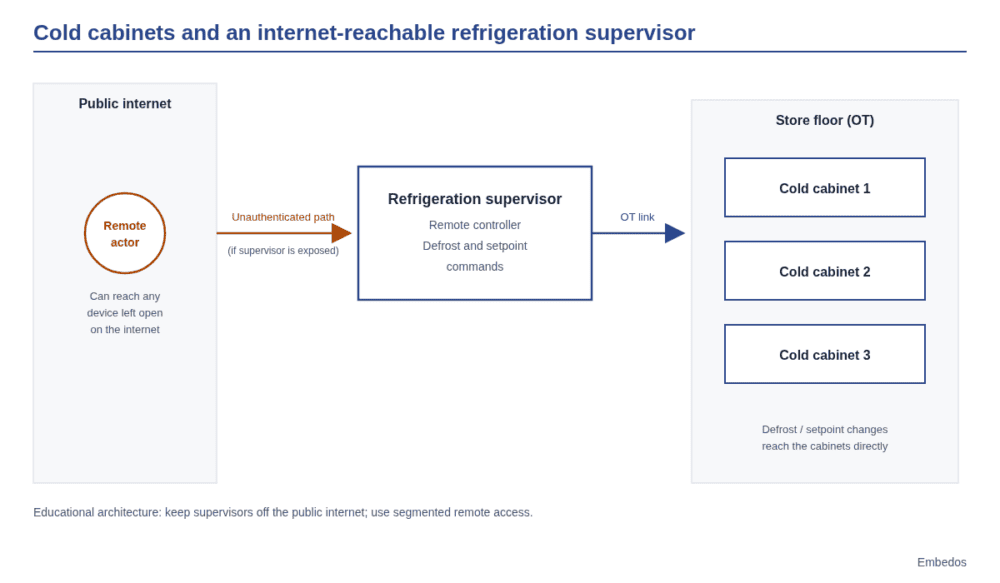
Embedos embedos-blogs diagram of supermarket cold cabinets controlled by an internet-exposed refrigeration supervisor.

When the fridge became the attack surface: France and Germany supermarket cyber lessons (2021 to 2026)

France and Germany supermarket refrigeration OT attacks in 2026, plus CERT-FR and BSI steps operators can take. Cold-chain lessons for India.

embedos-blogs: photo of warehousing godown sheds in Uttar Pradesh, India, where temperature and humidity are monitored for stored commodities

Warehouse temperature and humidity monitoring system for agri commodities

A warehouse temperature and humidity monitoring system for agri commodities measures two different things.

Ambient relative humidity (RH) and temperature tell you about the air in the shed;

Grain moisture tells you about the stock.

Vibration Transmitter 4-20mA 0-25 mm/s: Buyer Guide

Choosing a 0-25 mm/s 4-20 mA vibration transmitter for motors and fans: range, RMS velocity, frequency band, mounting and alarm limits.

Flow Meter Pulse Output vs 4-20mA: Which to Use and When

Pulse output or 4-20mA for your flow meter? Compare totalising accuracy, cable length, noise and PLC input needs, with simple examples for Indian plants.

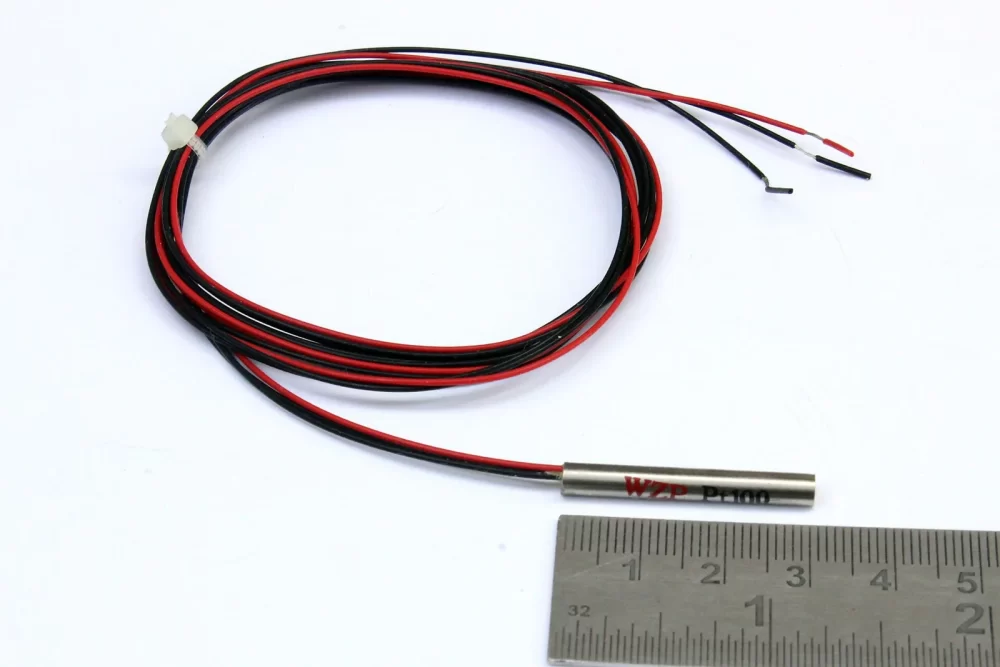
embedos-blogs-3-wire-pt100-to-4-20ma-transmitter-embedos-rtd: 3 wire PT100 sensor showing the three lead wires used for lead compensation

PT100 to 4-20mA Transmitter or Direct RTD Input?

PT100 for remote monitoring: wire it direct as 2, 3 or 4 wire RTD, or add a head mounted 4-20mA transmitter? Cable length, accuracy, noise and cost compared.

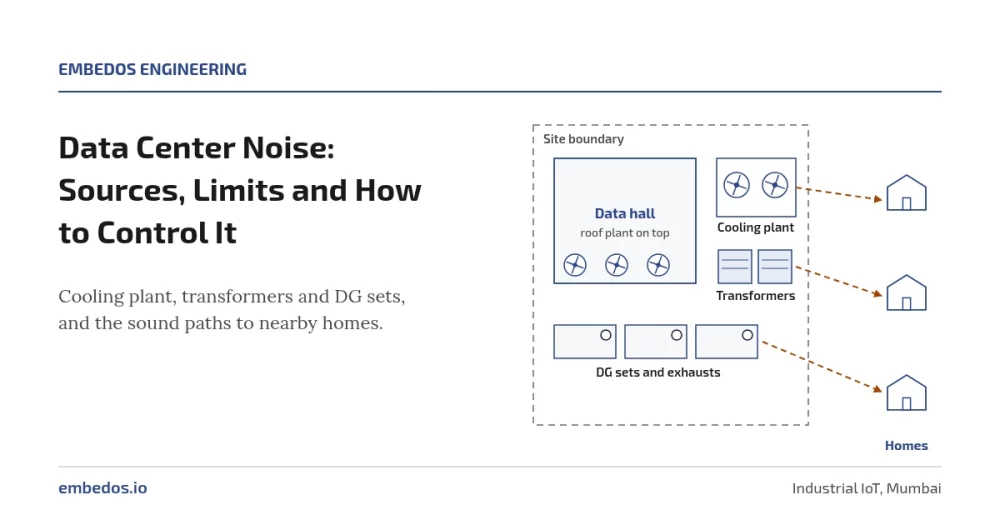
Embedos blogs featured image with the title Data Center Noise: Sources, Limits and How to Control It, beside a site plan with a data hall, cooling plant, transformers and DG sets, and dashed sound paths to nearby homes.

Data Center Noise: Sources, Limits and How to Control It

Why data centers are noisy, which sources reach neighbours, CPCB and WHO numbers, and how should engineers control and log boundary noise in India.

4G vs 5G Industrial Router: Which Suits Your Plant in India

4G or 5G industrial router for PLC and SCADA telemetry? Compare coverage, bandwidth, power, cost and dual SIM failover for Indian plants before you buy.

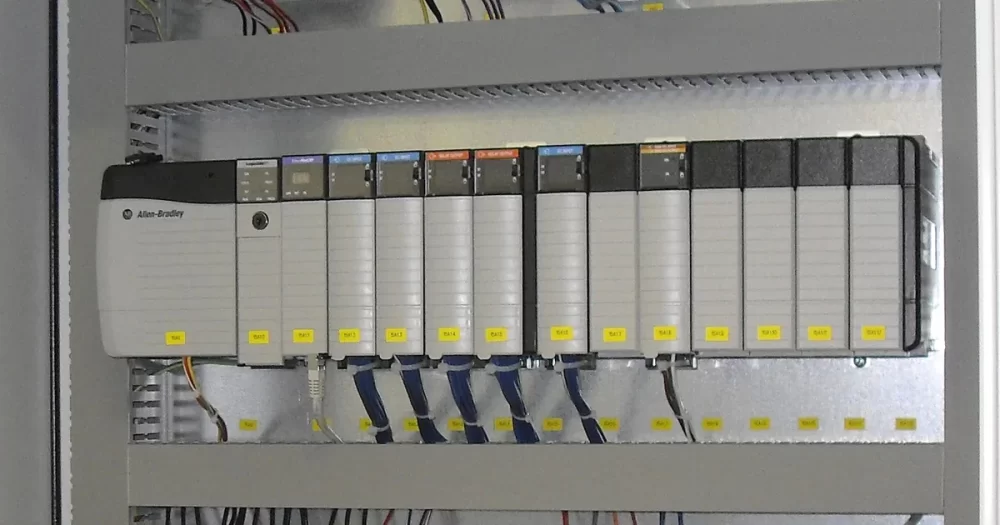
Embedos blogs embedos-blogs: PLC I/O rack wired in an industrial control panel, featured image for the Embedos guide to reading a Modbus register map

Modbus Register Map: How Do You Read It and Decode 32-bit Values (ABCD, CDAB, BADC, DCBA)?

How to read a Modbus register map: function codes, 40001 vs 0-based addresses, data types, scaling and a 32-bit float decoded. | Embedos Mumbai

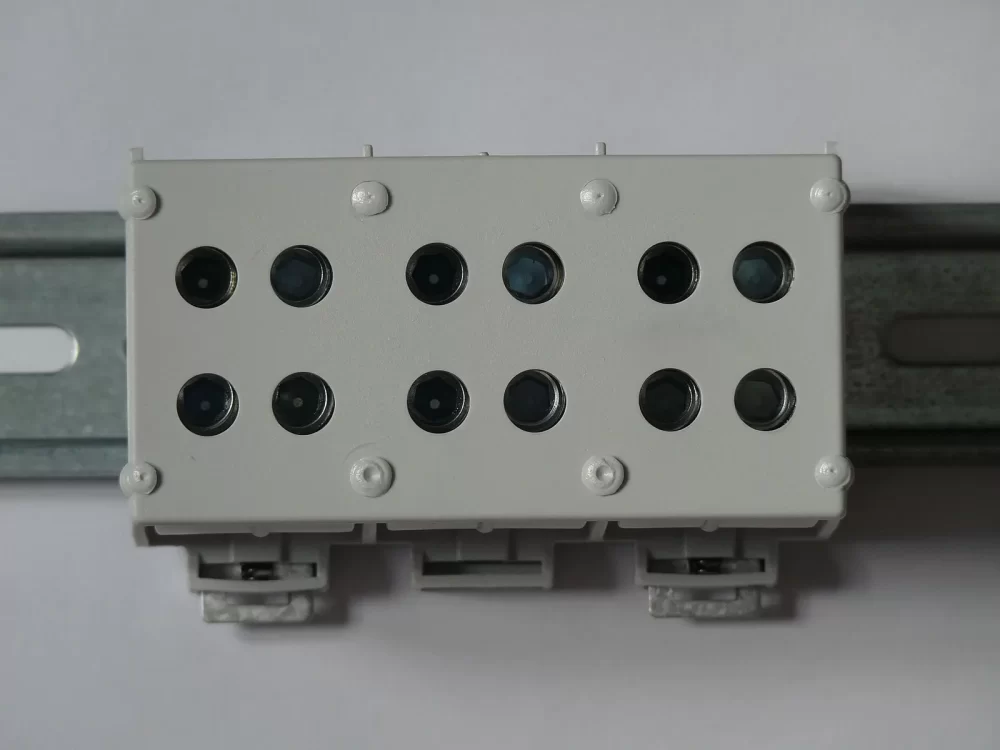
embedos-blogs-din-rail-4-20ma-signal-isolator-ground-loop-embedos-panel: DIN rail clamp terminal block, the kind of panel where a 4-20mA signal isolator is fitted before a PLC or gateway

4-20mA Signal Isolator: When You Need One for Ground Loops

When does a 4-20mA or 0-10V loop need a signal isolator before a PLC or IoT gateway?

Ground loops, shared supplies, noise signs and isolator types.

Embedos blogs featured image with the title Modbus RTU vs Modbus TCP: Frames, Wiring, Speed and When to Use Each, beside two rows of byte cells with the shared PDU shaded.

Modbus RTU vs Modbus TCP: Frames, Wiring, Speed and When to Use Each

Modbus RTU vs Modbus TCP from the official specs: framing, CRC vs MBAP header, addressing, port 502, RTU over TCP and gateways, for plant engineers.

Embedos blogs featured image with the title How to Build an OEE Baseline in Indian Plants Before You Buy an MES, beside stacked bars that shrink from shift time to fully productive time.

How to Build an OEE Baseline in Indian Plants Before You Buy an MES

Set a defensible OEE baseline before you choose MES software: what to measure, for how long, and how Indian plants can start with the machines they have.

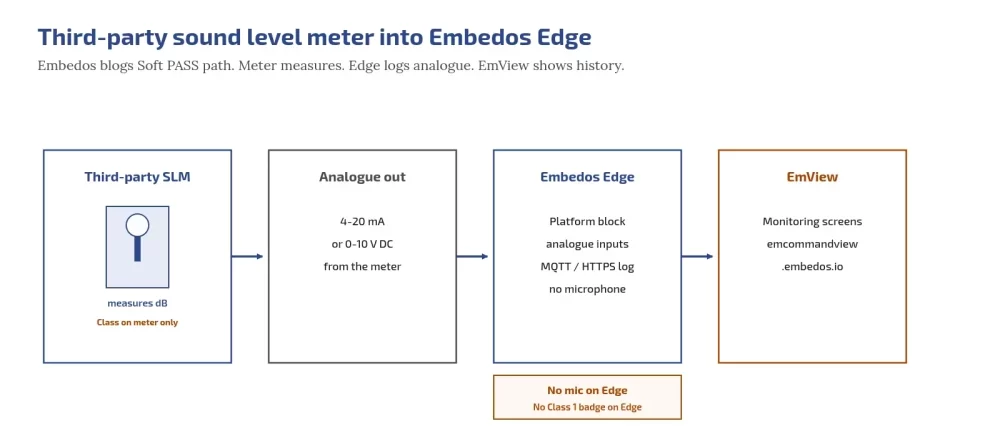
Embedos blogs embedos-blogs: third-party sound level meter analogue 4-20 mA or 0-10 V into Embedos Edge then EmView

How do you keep proving data center noise compliance after the site is built?

After a data center is built, one survey is not enough. How to run continuous boundary noise compliance logging against CPCB day and night limits in India.

OEE Monitoring System: What to Measure on Shop-Floor Machines

How to set up OEE monitoring on shop-floor machines: availability, performance and quality signals, legacy retrofit, and where an edge gateway fits.

Digitise a Bursting Strength Tester: Peak Hold to Wi-Fi Log

Upgrade a manual bursting strength tester with peak hold, auto bursting factor, RS-485 printer output and Wi-Fi data logging, without a new machine.

How Low Code / No Code Platforms are enhancing Digital Transformation, specially Industrial Iot!

Low code or No code development platforms are designed to accelerate the creation of business applications by providing pre-built connectors, templates, and other tools that allow users to build and deploy applications without writing a lot of code.

This can be especially useful for companies that want to quickly prototype and deploy new ideas, or that don’t have a lot of in-house software development resources.

Some common use cases for low-code platforms include creating custom business processes, building custom integrations, and creating dashboards and reports.

By providing a more efficient way to build and deploy custom business applications, low-code platforms can help organizations to move faster and get more done with limited resources.

In addition, low-code platforms can also help to bridge the gap between business and IT Consultants by enabling non-technical users to build and deploy their own solutions without relying on scarce development resources.

Overall, low-code platforms are likely to play a significant role in the digital transformation efforts of many organizations in the coming years.

One of the main benefits of low-code platforms is that they are designed to be user-friendly and easy to learn, even for people who don’t have a lot of technical expertise.

By using visual interfaces and drag-and-drop features, low-code platforms allow users to build and deploy custom business applications without having to write complex code.

This can make it easier for organizations to train new staff members and get them up to speed quickly, and it can also help to reduce the workload of existing IT staff by enabling them to focus on more strategic tasks rather than spending all of their time writing code.

Low-code platforms can help to reduce the cost and complexity of maintaining and updating data flows over time. Because low-code platforms use visual interfaces and simple logic rather than complex code, users can make updates and changes to data flows more easily and quickly.

Embedos_No Code_5

This can help to reduce the need for external specialists, and it can also make it easier for in-house teams to manage and maintain data flows without requiring a lot of technical expertise.

In addition, because low-code platforms are designed to be user-friendly and easy to learn, they can also help to reduce training costs and get new staff members up to speed more quickly.

Many low-code platforms also offer a range of resources and support materials, such as tutorials, documentation, and online communities, to help users get up to speed quickly and learn how to use the platform effectively.

In fact, results have shown that 70% of low code users with no prior experience of using low code platforms learned low code in less than one month.

By providing a more efficient and user-friendly way to create and deploy applications, low-code platforms can help organizations to get more done with limited resources and overcome some of the challenges that are commonly encountered during digital transformation projects.

In addition, by enabling non-technical users to take a more active role in building and managing data flows, low-code platforms can help organizations to share workloads more effectively and reduce the pressure on IT staff.

Embedos_Smowcode demo

Flow-based programming languages like Smowcode & nodered are designed to make it easier for users to build and deploy custom business applications by providing a more visual and intuitive way to create and manage data flows.

Embedos_No Code Images 5_node red

Rather than writing complex code, users can create data flows by connecting different “nodes” or elements together in a logical sequence.

Low-code platforms can be a valuable tool for building and deploying custom Internet of Things (IoT) applications.

By providing a more efficient and user-friendly way to connect and integrate different devices and data sources, low-code platforms can help organizations to more easily leverage the power of IoT in their operations.

For example, low-code platforms can be used to build custom dashboards and reports that visualize real-time IoT data, or to create custom applications that automate processes and trigger actions based on IoT data.

In addition, because low-code platforms are designed to be easy to learn and use, they can also help organizations to get more value out of their existing staff and resources, and they can enable non-technical users to take a more active role in building and deploying custom IoT applications.

By providing a more efficient and user-friendly way to build and deploy custom business applications, low-code platforms can help organizations to more easily connect and integrate different data sources and systems, and they can also help to streamline processes and improve collaboration across teams and departments.


Looking for End to End Industrial Automation & IoT Solutions? 


Our Experts Want to speak to You!

Read More

embedos-blogs-capacitive-embedos-level-non-metal: Embedos blogs diagram of a capacitive proximity sensor used for through-wall level and for a non-metal part in open air

Capacitive Proximity Sensor: Level and Non-Metal Distinction | Flush vs Non Flush | Guide

A capacitive proximity sensor is the right choice when the target is not a job for an inductive sensor: a liquid, a powder, a granule, or a non-metal solid such as plastic, wood or glass.

embedos-blogs-load-cell-embedos-signal-chain: Embedos blogs diagram comparing a load cell wired to a PLC weighing module with a load cell wired to an amplifier that sends 4-20 mA to a standard analog input

Load Cell Weighing Module for PLC: Buyer Guide

Load Cell Weighing Module for PLC: with Embedos.
PLC weighing module vs load cell amplifier with 4-20 mA vs edge logging: calibration, noise, excitation and how to choose for tank or batch weighing.

Embedos blogs embedos-blogs diagram: inductive sensor field detecting a steel target at short range versus photoelectric beam detecting an object at longer range

Inductive vs Photoelectric Sensor: Plant Selection Guide by Embedos Mumbai!

Inductive vs photoelectric Sensors. In proximity sensors for steel and power plants: Target, Flush vs Non-flush, 3-wire PNP/NPN, IP65 and dust checks. What to look for before purchasing?

When a timezone setting becomes a root shell: Four OT edge lessons in Cyber Security to learn in Industrial Automation

Four OT edge lessons from October 2026 CISA ICS advisories: timezone-to-shell, localhost bypass, Linux runtimes on controllers, and pollers without peer identity checks.

Embedos blogs embedos-blogs diagram: radar level transmitter on a small tank showing blocking distance, maximum level, minimum level and beam cone

Short-Range Radar Level Transmitter: Picking for 0.1-1.6 m

For a short range radar level transmitter on a vessel where the liquid sits 100 mm to 1600 mm below the flange, the spec that decides everything is the blocking distance (also called dead band or near-range limit).

embedos-blogs-linear-position-embedos-technologies: Embedos blogs diagram comparing magnetostrictive, draw-wire and laser distance sensors measuring a 0 to 1200 mm stroke

Absolute Linear Position Sensor: 0-1200 mm | magnetostrictive vs laser vs lvdt vs draw wire |Guide

Choosing an absolute linear position sensor for 0-1200 mm: magnetostrictive vs draw-wire vs laser, SSI or digital vs 4-20 mA, stroke and mounting.

Embedos embedos-blogs diagram of supermarket cold cabinets controlled by an internet-exposed refrigeration supervisor.

When the fridge became the attack surface: France and Germany supermarket cyber lessons (2021 to 2026)

France and Germany supermarket refrigeration OT attacks in 2026, plus CERT-FR and BSI steps operators can take. Cold-chain lessons for India.

embedos-blogs: photo of warehousing godown sheds in Uttar Pradesh, India, where temperature and humidity are monitored for stored commodities

Warehouse temperature and humidity monitoring system for agri commodities

A warehouse temperature and humidity monitoring system for agri commodities measures two different things.

Ambient relative humidity (RH) and temperature tell you about the air in the shed;

Grain moisture tells you about the stock.

Vibration Transmitter 4-20mA 0-25 mm/s: Buyer Guide

Choosing a 0-25 mm/s 4-20 mA vibration transmitter for motors and fans: range, RMS velocity, frequency band, mounting and alarm limits.

Flow Meter Pulse Output vs 4-20mA: Which to Use and When

Pulse output or 4-20mA for your flow meter? Compare totalising accuracy, cable length, noise and PLC input needs, with simple examples for Indian plants.

embedos-blogs-3-wire-pt100-to-4-20ma-transmitter-embedos-rtd: 3 wire PT100 sensor showing the three lead wires used for lead compensation

PT100 to 4-20mA Transmitter or Direct RTD Input?

PT100 for remote monitoring: wire it direct as 2, 3 or 4 wire RTD, or add a head mounted 4-20mA transmitter? Cable length, accuracy, noise and cost compared.

Embedos blogs featured image with the title Data Center Noise: Sources, Limits and How to Control It, beside a site plan with a data hall, cooling plant, transformers and DG sets, and dashed sound paths to nearby homes.

Data Center Noise: Sources, Limits and How to Control It

Why data centers are noisy, which sources reach neighbours, CPCB and WHO numbers, and how should engineers control and log boundary noise in India.

4G vs 5G Industrial Router: Which Suits Your Plant in India

4G or 5G industrial router for PLC and SCADA telemetry? Compare coverage, bandwidth, power, cost and dual SIM failover for Indian plants before you buy.

Embedos blogs embedos-blogs: PLC I/O rack wired in an industrial control panel, featured image for the Embedos guide to reading a Modbus register map

Modbus Register Map: How Do You Read It and Decode 32-bit Values (ABCD, CDAB, BADC, DCBA)?

How to read a Modbus register map: function codes, 40001 vs 0-based addresses, data types, scaling and a 32-bit float decoded. | Embedos Mumbai

embedos-blogs-din-rail-4-20ma-signal-isolator-ground-loop-embedos-panel: DIN rail clamp terminal block, the kind of panel where a 4-20mA signal isolator is fitted before a PLC or gateway

4-20mA Signal Isolator: When You Need One for Ground Loops

When does a 4-20mA or 0-10V loop need a signal isolator before a PLC or IoT gateway?

Ground loops, shared supplies, noise signs and isolator types.

Embedos blogs featured image with the title Modbus RTU vs Modbus TCP: Frames, Wiring, Speed and When to Use Each, beside two rows of byte cells with the shared PDU shaded.

Modbus RTU vs Modbus TCP: Frames, Wiring, Speed and When to Use Each

Modbus RTU vs Modbus TCP from the official specs: framing, CRC vs MBAP header, addressing, port 502, RTU over TCP and gateways, for plant engineers.

Embedos blogs featured image with the title How to Build an OEE Baseline in Indian Plants Before You Buy an MES, beside stacked bars that shrink from shift time to fully productive time.

How to Build an OEE Baseline in Indian Plants Before You Buy an MES

Set a defensible OEE baseline before you choose MES software: what to measure, for how long, and how Indian plants can start with the machines they have.

Embedos blogs embedos-blogs: third-party sound level meter analogue 4-20 mA or 0-10 V into Embedos Edge then EmView

How do you keep proving data center noise compliance after the site is built?

After a data center is built, one survey is not enough. How to run continuous boundary noise compliance logging against CPCB day and night limits in India.

OEE Monitoring System: What to Measure on Shop-Floor Machines

How to set up OEE monitoring on shop-floor machines: availability, performance and quality signals, legacy retrofit, and where an edge gateway fits.

Digitise a Bursting Strength Tester: Peak Hold to Wi-Fi Log

Upgrade a manual bursting strength tester with peak hold, auto bursting factor, RS-485 printer output and Wi-Fi data logging, without a new machine.

EVs are great! But what of fraud risk at charging stations? Who keeps tabs on that?

Addressing fraud at charging points can be a complex task.

For commercial charging stations, fraud prevention measures may include implementing secure payment systems, conducting regular audits and inspections, and monitoring usage patterns to identify any unusual activity.

It will be helpful to have clear policies and procedures in place for billing and payment, and to establish partnerships with trusted EV maintenance companies to help ensure the integrity of the charging infrastructure.

For retail customers, fraud prevention measures may include using secure payment methods, such as credit or debit cards, and monitoring usage patterns to identify any unusual activity.

It may also be helpful to gather demographic and billing data to help identify any potential fraud risks, and to establish procedures for handling complaints or concerns about charging activity.

A combination of technological solutions, such as secure payment systems and smart charging stations, and proactive risk management practices, such as audits and monitoring, can help to mitigate the risk of fraud at EV charging points.

Integrating new charging infrastructure with existing systems can be a challenge for electricity providers. It is important to ensure that the new charging stations are securely connected to the grid and that the necessary safeguards are in place to protect against cyber threats.

There are a few measures in place to help mitigate fraud risk at charging stations for electric vehicles (EVs). One measure is the use of secure payment systems, such as credit or debit cards, to charge for the electricity.

These payment systems have fraud protection measures in place and can help to prevent unauthorized charging.

Another measure is the use of smart charging stations, which can be configured to only allow charging when a valid payment method is presented, such as a charging card or a mobile payment app. These smart charging stations may also have security measures in place to prevent tampering or unauthorized access.

In addition, many charging station networks have customer service teams that monitor charging activity and can identify and address any suspicious activity or fraud.

As the EV charging network grows and becomes more established, it is likely that additional measures will be put in place to further reduce the risk of fraud.

Embedos_EV Picture_2

One way to address this challenge is to use secure, standards-based communication protocols for the transmission of data between the charging stations and the energy provider’s systems. This can help to prevent unauthorized access to sensitive data and ensure the integrity of the charging process.

It may also be helpful for energy providers to conduct regular security assessments and implement appropriate security measures, such as firewalls and secure authentication protocols, to protect against cyber threats.

In addition, implementing robust incident response and recovery plans can help to minimize the impact of any successful attacks and ensure the continued operation of the charging infrastructure.

Compliance with regulatory policies and requirements is an important aspect of managing risk and ensuring the safe and secure operation of EV charging infrastructure.

Energy commissions and other regulatory authorities often set policies and guidelines for the deployment and operation of charging stations to ensure that they are safe and reliable, and to protect against potential risks such as cyber threats and unauthorized access.

Energy providers and charging station operators are typically required to comply with these policies and may be subject to inspections and audits to ensure compliance.

In addition to compliance with regulatory policies, it is also important for charging station operators to implement effective governance risk management practices to help identify and mitigate potential risks.

This may include conducting regular risk assessments, implementing appropriate cyber security measures, and establishing clear policies and procedures for access and control of the charging infrastructure.

Integrating and connecting anti-theft and fraud prevention programs and tools can be an effective way for energy providers to get a better understanding of fraudulent activities and to take steps to prevent losses. Some potential solutions that could be considered include:

  • Installing iot devices, at charging stations to gather data on activity and usage patterns. This data can then be analyzed to identify any unusual activity or potential fraud.
  • Implementing an automated #rule engine that can trigger alerts in near real-time when potential fraud is detected. This can help to quickly identify and address any issues.
  • Using secure payment systems, such as credit or debit cards, to charge for electricity at the charging stations. These payment systems often have fraud protection measures in place to help prevent unauthorized charging.
  • Implementing security measures, such as firewalls and secure authentication protocols, to protect against cyber threats.
  • Conducting regular risk assessments and audits to identify potential vulnerabilities and take steps to mitigate them.

A combination of technological solutions and proactive risk management practices can help energy providers reduce the risk of fraud and protect against losses.

Embedos_EV Picture_1

Using #predictiveanalytics can help to reduce false positives and refine controls on the fly in the fight against fraud at EV charging stations. #predictivemaintenance involves using advanced analytical techniques, such as machine learning and data mining, to analyze data and make recommendations for action based on the insights gained.

In the context of EV charging stations, predictive analytics could be used to analyze data on charging activity and usage patterns to identify any unusual or suspicious activity. This data could then be used to refine existing controls and identify new controls that could be put in place to help prevent fraud.

For example, predictive analytics could be used to identify patterns of activity that are commonly associated with fraud, such as the use of stolen credit cards or payment fraud. This information could then be used to develop new controls or refine existing ones to better detect and prevent these types of fraud.

Incorporating predictive analytics into fraud prevention efforts at EV charging stations can help to identify new and emerging frauds, reduce false positives, and improve the effectiveness of existing controls.

#monitoring the charging infrastructure end-to-end and analyzing usage data can be effective ways for energy providers to identify and mitigate risks at EV charging stations.

Monitoring the charging infrastructure end-to-end can help to identify any discrepancies or issues with the charging process, such as unauthorized access or tampering with equipment.

This can be achieved through the use of sensors and other iotdevices , as well as through regular inspections and audits of the charging infrastructure.

Analyzing usage data can also be helpful in identifying potential risks or vulnerabilities. For example, analyzing usage patterns and profiles can help to identify any unusual activity or potential fraud. This can be done through the use of data analytics tools and techniques, such as machine learning and data mining.

Thus, a combination of #end-to-end monitoring and usage analysis can help energy providers to identify and mitigate risks at #ev charging stations and protect against potential vulnerabilities.

Using technology to help prevent #fraud and protect against revenue losses can be an effective way for energy providers to ensure compliance and transparency in their revenue generation.

Implementing advanced technologies, such as smart meters and real-time monitoring systems, can help energy providers to accurately track and measure electricity usage and identify any unauthorized or fraudulent activity.

As the demand for electricity from EVs continues to grow, it is likely that energy providers will need to invest in technology to ensure the integrity of their charging infrastructure and protect against revenue losses.

In a competitive market, energy providers that are able to effectively manage the risks and vulnerabilities associated with EV charging may have a competitive advantage.

 Here are some steps that energy providers can take to help prevent fraud at EV charging stations:

  1. Use secure payment systems: Implementing secure payment systems, such as credit or debit cards, can help to prevent unauthorized charging and protect against fraud.
  2. Implement smart charging stations: Configuring charging stations to only allow charging when a valid payment method is presented can help to prevent unauthorized access and tampering.
  3. Monitor charging activity: Establishing customer service teams or other monitoring systems to identify and address any suspicious activity or fraud can be an effective way to prevent losses.
  4. Implement security measures: Protecting against cyber threats is important for the security of the charging infrastructure. Implementing measures such as firewalls and secure authentication protocols can help to prevent unauthorized access.
  5. Conduct regular risk assessments: Regularly assessing the charging infrastructure for vulnerabilities and taking steps to mitigate any identified risks can help to prevent fraud.
  6. Use data analytics: Analyzing data on charging activity and usage patterns can help to identify any unusual activity or potential fraud. Implementing data analytics tools and techniques, such as machine learning and data mining, can be an effective way to identify risks and take preventative action.
  7. Establish clear policies and procedures: Having clear policies and procedures in place for billing, payment, and access to the charging infrastructure can help to prevent fraud and protect against losses.

A few additional steps that energy providers can consider to help prevent fraud at EV charging stations:

  1. Partner with trusted EV maintenance companies: Establishing partnerships with trusted EV maintenance companies can help to ensure the integrity of the charging infrastructure and reduce the risk of fraud.
  2. Implement customer authentication systems: Implementing systems to authenticate customers, such as through the use of charging cards or mobile payment apps, can help to prevent unauthorized access to the charging stations.
  3. Educate customers: Providing customers with information on how to properly use the charging infrastructure and what to do if they suspect any fraudulent activity can help to prevent losses.
  4. Monitor third-party vendors: If the charging infrastructure includes third-party vendors, such as EV charging vendors or electric meter spoofing companies, it is important to monitor their activity to ensure compliance with policies and procedures and to identify any potential fraudulent activity.
  5. Use predictive analytics: Incorporating prescriptive analytics, which involves using advanced analytical techniques to identify patterns and make recommendations for action, can help to refine controls and reduce false positives in the fight against fraud.

There are a number of steps that energy providers can take to help prevent fraud and protect against losses at EV charging stations.

By implementing a combination of technological solutions, proactive risk management practices, and clear policies and procedures, energy providers can ensure the reliability and integrity of their charging infrastructure and reduce the risk of fraud.

Embedos Industrial Automation End to End Scope

Embedos is a full-stack IoT device platform that includes a device cloud platform, connectivity hardware, and varied automation & Interface Solutions. 

Are you looking for Industrial IoT solutions? Contact Embedos to know more!


Looking for End to End Industrial Automation & IoT Solutions? 


Our Experts Want to speak to You!

Read More

embedos-blogs-capacitive-embedos-level-non-metal: Embedos blogs diagram of a capacitive proximity sensor used for through-wall level and for a non-metal part in open air

Capacitive Proximity Sensor: Level and Non-Metal Distinction | Flush vs Non Flush | Guide

A capacitive proximity sensor is the right choice when the target is not a job for an inductive sensor: a liquid, a powder, a granule, or a non-metal solid such as plastic, wood or glass.

embedos-blogs-load-cell-embedos-signal-chain: Embedos blogs diagram comparing a load cell wired to a PLC weighing module with a load cell wired to an amplifier that sends 4-20 mA to a standard analog input

Load Cell Weighing Module for PLC: Buyer Guide

Load Cell Weighing Module for PLC: with Embedos.
PLC weighing module vs load cell amplifier with 4-20 mA vs edge logging: calibration, noise, excitation and how to choose for tank or batch weighing.

Embedos blogs embedos-blogs diagram: inductive sensor field detecting a steel target at short range versus photoelectric beam detecting an object at longer range

Inductive vs Photoelectric Sensor: Plant Selection Guide by Embedos Mumbai!

Inductive vs photoelectric Sensors. In proximity sensors for steel and power plants: Target, Flush vs Non-flush, 3-wire PNP/NPN, IP65 and dust checks. What to look for before purchasing?

When a timezone setting becomes a root shell: Four OT edge lessons in Cyber Security to learn in Industrial Automation

Four OT edge lessons from October 2026 CISA ICS advisories: timezone-to-shell, localhost bypass, Linux runtimes on controllers, and pollers without peer identity checks.

Embedos blogs embedos-blogs diagram: radar level transmitter on a small tank showing blocking distance, maximum level, minimum level and beam cone

Short-Range Radar Level Transmitter: Picking for 0.1-1.6 m

For a short range radar level transmitter on a vessel where the liquid sits 100 mm to 1600 mm below the flange, the spec that decides everything is the blocking distance (also called dead band or near-range limit).

embedos-blogs-linear-position-embedos-technologies: Embedos blogs diagram comparing magnetostrictive, draw-wire and laser distance sensors measuring a 0 to 1200 mm stroke

Absolute Linear Position Sensor: 0-1200 mm | magnetostrictive vs laser vs lvdt vs draw wire |Guide

Choosing an absolute linear position sensor for 0-1200 mm: magnetostrictive vs draw-wire vs laser, SSI or digital vs 4-20 mA, stroke and mounting.

Embedos embedos-blogs diagram of supermarket cold cabinets controlled by an internet-exposed refrigeration supervisor.

When the fridge became the attack surface: France and Germany supermarket cyber lessons (2021 to 2026)

France and Germany supermarket refrigeration OT attacks in 2026, plus CERT-FR and BSI steps operators can take. Cold-chain lessons for India.

embedos-blogs: photo of warehousing godown sheds in Uttar Pradesh, India, where temperature and humidity are monitored for stored commodities

Warehouse temperature and humidity monitoring system for agri commodities

A warehouse temperature and humidity monitoring system for agri commodities measures two different things.

Ambient relative humidity (RH) and temperature tell you about the air in the shed;

Grain moisture tells you about the stock.

Vibration Transmitter 4-20mA 0-25 mm/s: Buyer Guide

Choosing a 0-25 mm/s 4-20 mA vibration transmitter for motors and fans: range, RMS velocity, frequency band, mounting and alarm limits.

Flow Meter Pulse Output vs 4-20mA: Which to Use and When

Pulse output or 4-20mA for your flow meter? Compare totalising accuracy, cable length, noise and PLC input needs, with simple examples for Indian plants.

embedos-blogs-3-wire-pt100-to-4-20ma-transmitter-embedos-rtd: 3 wire PT100 sensor showing the three lead wires used for lead compensation

PT100 to 4-20mA Transmitter or Direct RTD Input?

PT100 for remote monitoring: wire it direct as 2, 3 or 4 wire RTD, or add a head mounted 4-20mA transmitter? Cable length, accuracy, noise and cost compared.

Embedos blogs featured image with the title Data Center Noise: Sources, Limits and How to Control It, beside a site plan with a data hall, cooling plant, transformers and DG sets, and dashed sound paths to nearby homes.

Data Center Noise: Sources, Limits and How to Control It

Why data centers are noisy, which sources reach neighbours, CPCB and WHO numbers, and how should engineers control and log boundary noise in India.

4G vs 5G Industrial Router: Which Suits Your Plant in India

4G or 5G industrial router for PLC and SCADA telemetry? Compare coverage, bandwidth, power, cost and dual SIM failover for Indian plants before you buy.

Embedos blogs embedos-blogs: PLC I/O rack wired in an industrial control panel, featured image for the Embedos guide to reading a Modbus register map

Modbus Register Map: How Do You Read It and Decode 32-bit Values (ABCD, CDAB, BADC, DCBA)?

How to read a Modbus register map: function codes, 40001 vs 0-based addresses, data types, scaling and a 32-bit float decoded. | Embedos Mumbai

embedos-blogs-din-rail-4-20ma-signal-isolator-ground-loop-embedos-panel: DIN rail clamp terminal block, the kind of panel where a 4-20mA signal isolator is fitted before a PLC or gateway

4-20mA Signal Isolator: When You Need One for Ground Loops

When does a 4-20mA or 0-10V loop need a signal isolator before a PLC or IoT gateway?

Ground loops, shared supplies, noise signs and isolator types.

Embedos blogs featured image with the title Modbus RTU vs Modbus TCP: Frames, Wiring, Speed and When to Use Each, beside two rows of byte cells with the shared PDU shaded.

Modbus RTU vs Modbus TCP: Frames, Wiring, Speed and When to Use Each

Modbus RTU vs Modbus TCP from the official specs: framing, CRC vs MBAP header, addressing, port 502, RTU over TCP and gateways, for plant engineers.

Embedos blogs featured image with the title How to Build an OEE Baseline in Indian Plants Before You Buy an MES, beside stacked bars that shrink from shift time to fully productive time.

How to Build an OEE Baseline in Indian Plants Before You Buy an MES

Set a defensible OEE baseline before you choose MES software: what to measure, for how long, and how Indian plants can start with the machines they have.

Embedos blogs embedos-blogs: third-party sound level meter analogue 4-20 mA or 0-10 V into Embedos Edge then EmView

How do you keep proving data center noise compliance after the site is built?

After a data center is built, one survey is not enough. How to run continuous boundary noise compliance logging against CPCB day and night limits in India.

OEE Monitoring System: What to Measure on Shop-Floor Machines

How to set up OEE monitoring on shop-floor machines: availability, performance and quality signals, legacy retrofit, and where an edge gateway fits.

Digitise a Bursting Strength Tester: Peak Hold to Wi-Fi Log

Upgrade a manual bursting strength tester with peak hold, auto bursting factor, RS-485 printer output and Wi-Fi data logging, without a new machine.

What Airtel, Jio & Vodafone are doing, and how they can lead in the IoT Market!

What Airtel, Jio, Vodafone are doing, and how they can lead in the IoT Market!

As the telecos power ahead with new age internet technologies, like IoT, AR/VR, Blockchain and with the obvious use of AI, there is a large market that they can capture.

Internet of Things (IoT) services are becoming increasingly important as more and more devices are connected to the internet. Telcos, Telecommunications & Internet companies, have the opportunity to play a key role in the development and deployment of these services.

There are several ways that telcos can lead the future of IoT services:

  1. Connectivity: Telcos have the infrastructure and expertise to provide the connectivity that is necessary for IoT devices to communicate with each other and with the internet. This includes both wireless and wired connectivity options.
  2. Network management: Telcom Companies can manage the networks that IoT devices operate on, ensuring that they are secure and reliable. This includes managing data traffic, providing security measures such as encryption, and monitoring for potential issues.
  3. Data analytics: Telcos can collect and analyze data from IoT devices to gain insights and improve their services. This can include identifying patterns and trends, as well as predicting potential issues and developing solutions.
  4. Platforms: Can develop platforms that enable businesses and organizations to easily manage and control their IoT devices and systems. These platforms can provide features such as remote monitoring, automation, and device management.

Overall, telcos have the potential to be key players in the development and deployment of IoT services, helping to drive innovation and create new opportunities for businesses and individuals.

The B2B sector can be an important area of growth for telcos, and IoT is a key area for differentiation. IoT has the potential to transform various industries, including manufacturing, transportation, and healthcare, by enabling businesses to collect and analyze data from connected devices to improve efficiency and productivity.

Additionally, telcos that can develop and offer platform solutions that enable businesses to easily manage and control their IoT systems can also differentiate themselves in the market.

It’s important for telcos to stay up-to-date on the latest technologies and trends in the IoT space and to be able to adapt and offer new services as the market evolves. By offering innovative and differentiated IoT services, telcos can position themselves as leaders in the market and drive growth in the B2B sector.

Like what Jio is doing with Blockchain, AR/VR, IoT or even what Airtel is doing in the Industrial IoT Space is to watch out for.

5G networks are expected to play a significant role in the growth of the IoT, as they can provide faster, more reliable connectivity and support a greater number of connected devices. This can make it easier for businesses to deploy IoT solutions and realize the benefits of connected devices more quickly.

Telcos that have already upgraded to 5G networks can leverage this advantage to offer market-ready IoT solutions that are quick and simple to deploy. By bundling connectivity, network management, and device management into one package, telcos can make it easier for businesses to implement and scale their IoT systems.

In addition to 5G networks, telcos can also leverage other technologies, such as low-power wide-area networks (LPWAN) and edge computing, to enable the deployment of IoT solutions in a variety of environments and applications. By offering a range of IoT solutions that are tailored to different industries and use cases, telcos can further differentiate themselves and meet the needs of a diverse set of customers.

IoT offers telcos the opportunity to create new revenue streams and improve their business model by becoming service providers. By offering IoT services that enable businesses to collect and analyze data from connected devices, telcos can help their customers increase efficiency and productivity, leading to cost savings and improved profitability.

There are many B2B use cases for IoT technology, including smart hospitals, intelligent factories, fleet management, and autonomous vehicles, that require low latency, high bandwidth, and high reliability. Telcos can play a key role in enabling these use cases by providing the necessary connectivity and network management services.

Embedos_5g-min

In addition to helping businesses realize the value of IoT quickly, telcos can also differentiate themselves in the market by offering innovative solutions that meet the specific needs of their customers. For example, telcos can offer custom packages that include data analytics services, platform solutions, and consulting services to help businesses get the most out of their IoT systems.

Overall, IoT offers a significant opportunity for telcos to become service providers and drive growth through the development and deployment of innovative solutions that meet the needs of their customers.

Robust mobile network coverage is essential for the widespread adoption of #iot technology. Telcos can play a key role in enabling IoT adoption by providing reliable, secure connectivity that enables connected devices to communicate with each other and with the internet.

By offering core connectivity services that go beyond simply selling “the pipe,” telcos can differentiate themselves in the market and provide value to their customers by helping them achieve specific business outcomes.

The IoT market is expected to continue to grow in the coming years, and telcom companies that are able to offer innovative, value-added services will be well-positioned to take advantage of this growth. By helping businesses achieve their digital transformation goals and providing the necessary #network connectivity, telcos can showcase the true value of their services and push back against market commoditization.

IoT has the potential to transform various industries and aspects of our lives by enabling the collection and analysis of data from connected devices. IoT technology is based on a network of connected devices that can communicate with each other and with the internet, allowing for the exchange of real-time data and updates.

There are many potential applications for IoT technology, including smart homes, smart cities, agriculture, manufacturing, transportation, and healthcare. In each of these areas, IoT can help businesses and organizations improve efficiency, productivity, and decision-making by providing real-time data and insights.

In order to realize the full potential of IoT, it is important for the technology to be simple to deploy and use. Telcos and other service providers can play a key role in simplifying the delivery of IoT solutions by offering packages that include connectivity, network management, and device management services. By making it easy for businesses to get started with IoT, service providers can help drive widespread adoption of the technology.

Embedos_5G _ 1

Partner networks can be an effective way for telcos to accelerate the adoption of IoT technology in the B2B market. By working with other companies and organizations that have complementary skills and expertise, telcos can bring innovative solutions to market more quickly and efficiently.

Telcos have a unique advantage in the IoT space due to their expertise in connectivity and network management. By partnering with companies that have expertise in areas such as data analytics, device management, and industry-specific solutions, telcos can offer more comprehensive packages to their customers and help them achieve their digital transformation goals.

Partnering with other companies can also help telcos to address challenges such as time-to-market and cost, as they can share resources and expertise to develop and deploy solutions more efficiently. By building strong partner ecosystems, telcos can leverage the strengths of different organizations and create mutually beneficial relationships that drive growth and innovation in the IoT market.

Partnering with other companies in the supply chain can be an effective way for telcos to accelerate the adoption of IoT technology. By working with distributors and supply chain platform partners, telcos can streamline the process of bringing new products and services to market and make it easier for customers to access the IoT solutions they need.

Distributors can provide logistics, inventory, and contracting services, as well as expertise in building tech stacks for a variety of use cases, which can help telcos to add new products and services quickly and efficiently. Supply chain platform partners can offer automated subscription and billing workflows and a digital self-service experience that lets customers select their IoT solutions on demand, further simplifying the process of accessing the technology.

Overall, building strong partner ecosystems can help telcos to focus on their core competencies, such as connectivity, while leveraging the expertise of other companies to bring innovative solutions to market more quickly and efficiently. This can help telcos to drive growth and differentiate themselves in the IoT market.


Looking for End to End Industrial Automation & IoT Solutions? 


Our Experts Want to speak to You!

Read More

embedos-blogs-capacitive-embedos-level-non-metal: Embedos blogs diagram of a capacitive proximity sensor used for through-wall level and for a non-metal part in open air

Capacitive Proximity Sensor: Level and Non-Metal Distinction | Flush vs Non Flush | Guide

A capacitive proximity sensor is the right choice when the target is not a job for an inductive sensor: a liquid, a powder, a granule, or a non-metal solid such as plastic, wood or glass.

embedos-blogs-load-cell-embedos-signal-chain: Embedos blogs diagram comparing a load cell wired to a PLC weighing module with a load cell wired to an amplifier that sends 4-20 mA to a standard analog input

Load Cell Weighing Module for PLC: Buyer Guide

Load Cell Weighing Module for PLC: with Embedos.
PLC weighing module vs load cell amplifier with 4-20 mA vs edge logging: calibration, noise, excitation and how to choose for tank or batch weighing.

Embedos blogs embedos-blogs diagram: inductive sensor field detecting a steel target at short range versus photoelectric beam detecting an object at longer range

Inductive vs Photoelectric Sensor: Plant Selection Guide by Embedos Mumbai!

Inductive vs photoelectric Sensors. In proximity sensors for steel and power plants: Target, Flush vs Non-flush, 3-wire PNP/NPN, IP65 and dust checks. What to look for before purchasing?

When a timezone setting becomes a root shell: Four OT edge lessons in Cyber Security to learn in Industrial Automation

Four OT edge lessons from October 2026 CISA ICS advisories: timezone-to-shell, localhost bypass, Linux runtimes on controllers, and pollers without peer identity checks.

Embedos blogs embedos-blogs diagram: radar level transmitter on a small tank showing blocking distance, maximum level, minimum level and beam cone

Short-Range Radar Level Transmitter: Picking for 0.1-1.6 m

For a short range radar level transmitter on a vessel where the liquid sits 100 mm to 1600 mm below the flange, the spec that decides everything is the blocking distance (also called dead band or near-range limit).

embedos-blogs-linear-position-embedos-technologies: Embedos blogs diagram comparing magnetostrictive, draw-wire and laser distance sensors measuring a 0 to 1200 mm stroke

Absolute Linear Position Sensor: 0-1200 mm | magnetostrictive vs laser vs lvdt vs draw wire |Guide

Choosing an absolute linear position sensor for 0-1200 mm: magnetostrictive vs draw-wire vs laser, SSI or digital vs 4-20 mA, stroke and mounting.

Embedos embedos-blogs diagram of supermarket cold cabinets controlled by an internet-exposed refrigeration supervisor.

When the fridge became the attack surface: France and Germany supermarket cyber lessons (2021 to 2026)

France and Germany supermarket refrigeration OT attacks in 2026, plus CERT-FR and BSI steps operators can take. Cold-chain lessons for India.

embedos-blogs: photo of warehousing godown sheds in Uttar Pradesh, India, where temperature and humidity are monitored for stored commodities

Warehouse temperature and humidity monitoring system for agri commodities

A warehouse temperature and humidity monitoring system for agri commodities measures two different things.

Ambient relative humidity (RH) and temperature tell you about the air in the shed;

Grain moisture tells you about the stock.

Vibration Transmitter 4-20mA 0-25 mm/s: Buyer Guide

Choosing a 0-25 mm/s 4-20 mA vibration transmitter for motors and fans: range, RMS velocity, frequency band, mounting and alarm limits.

Flow Meter Pulse Output vs 4-20mA: Which to Use and When

Pulse output or 4-20mA for your flow meter? Compare totalising accuracy, cable length, noise and PLC input needs, with simple examples for Indian plants.

embedos-blogs-3-wire-pt100-to-4-20ma-transmitter-embedos-rtd: 3 wire PT100 sensor showing the three lead wires used for lead compensation

PT100 to 4-20mA Transmitter or Direct RTD Input?

PT100 for remote monitoring: wire it direct as 2, 3 or 4 wire RTD, or add a head mounted 4-20mA transmitter? Cable length, accuracy, noise and cost compared.

Embedos blogs featured image with the title Data Center Noise: Sources, Limits and How to Control It, beside a site plan with a data hall, cooling plant, transformers and DG sets, and dashed sound paths to nearby homes.

Data Center Noise: Sources, Limits and How to Control It

Why data centers are noisy, which sources reach neighbours, CPCB and WHO numbers, and how should engineers control and log boundary noise in India.

4G vs 5G Industrial Router: Which Suits Your Plant in India

4G or 5G industrial router for PLC and SCADA telemetry? Compare coverage, bandwidth, power, cost and dual SIM failover for Indian plants before you buy.

Embedos blogs embedos-blogs: PLC I/O rack wired in an industrial control panel, featured image for the Embedos guide to reading a Modbus register map

Modbus Register Map: How Do You Read It and Decode 32-bit Values (ABCD, CDAB, BADC, DCBA)?

How to read a Modbus register map: function codes, 40001 vs 0-based addresses, data types, scaling and a 32-bit float decoded. | Embedos Mumbai

embedos-blogs-din-rail-4-20ma-signal-isolator-ground-loop-embedos-panel: DIN rail clamp terminal block, the kind of panel where a 4-20mA signal isolator is fitted before a PLC or gateway

4-20mA Signal Isolator: When You Need One for Ground Loops

When does a 4-20mA or 0-10V loop need a signal isolator before a PLC or IoT gateway?

Ground loops, shared supplies, noise signs and isolator types.

Embedos blogs featured image with the title Modbus RTU vs Modbus TCP: Frames, Wiring, Speed and When to Use Each, beside two rows of byte cells with the shared PDU shaded.

Modbus RTU vs Modbus TCP: Frames, Wiring, Speed and When to Use Each

Modbus RTU vs Modbus TCP from the official specs: framing, CRC vs MBAP header, addressing, port 502, RTU over TCP and gateways, for plant engineers.

Embedos blogs featured image with the title How to Build an OEE Baseline in Indian Plants Before You Buy an MES, beside stacked bars that shrink from shift time to fully productive time.

How to Build an OEE Baseline in Indian Plants Before You Buy an MES

Set a defensible OEE baseline before you choose MES software: what to measure, for how long, and how Indian plants can start with the machines they have.

Embedos blogs embedos-blogs: third-party sound level meter analogue 4-20 mA or 0-10 V into Embedos Edge then EmView

How do you keep proving data center noise compliance after the site is built?

After a data center is built, one survey is not enough. How to run continuous boundary noise compliance logging against CPCB day and night limits in India.

OEE Monitoring System: What to Measure on Shop-Floor Machines

How to set up OEE monitoring on shop-floor machines: availability, performance and quality signals, legacy retrofit, and where an edge gateway fits.

Digitise a Bursting Strength Tester: Peak Hold to Wi-Fi Log

Upgrade a manual bursting strength tester with peak hold, auto bursting factor, RS-485 printer output and Wi-Fi data logging, without a new machine.

How to calculate the service life of an industrial asset using Industrial IoT (IIoT)?

How to calculate the service life of an industrial asset using Industrial IoT (IIoT)?

The service life of an industrial asset is the length of time that the asset can be expected to operate effectively and efficiently. There are several factors that can affect the service life of an industrial asset, including:

  1. The type of asset: Different types of assets have different expected service lives. For example, a piece of machinery may have a longer service life than a tool or a piece of equipment.
  2. The condition of the asset: The condition of the asset can have a significant impact on its service life. If an asset is well-maintained and operated correctly, it is likely to have a longer service life.
  3. The environment in which the asset is used: The environment in which an asset is used can also affect its service life. For example, an asset used in a harsh or corrosive environment may have a shorter service life than an asset used in a more benign environment.
  4. The level of use: The more an asset is used, the shorter its service life is likely to be.

To calculate the service life of an industrial asset, you will need to consider these factors and make an educated estimate based on your specific circumstances. You may also want to consult industry standards or guidelines for guidance on expected service life for different types of assets.

There are a few other factors that can impact the service life of an industrial asset:

  1. The quality of the asset: Higher quality assets are likely to have a longer service life than lower quality assets.
  2. The level of maintenance: Regular maintenance can help extend the service life of an asset by ensuring that it is operating correctly and efficiently.
  3. The design of the asset: The design of an asset can also impact its service life. For example, an asset designed with durability in mind is likely to have a longer service life than an asset designed for lower cost.
  4. The level of expertise of the operators: The level of expertise of the operators can also affect the service life of an asset. If operators are trained to operate the asset correctly and are familiar with best practices, it is likely to have a longer service life.
  5. The availability of replacement parts: The availability of replacement parts can also impact the service life of an asset. If it is difficult to obtain replacement parts, the service life of the asset may be shorter.

It is important to carefully consider these factors when calculating the service life of an industrial asset, as they can have a significant impact on the overall performance and reliability of the asset.

Embedos Blogs_worker-operating-industrial-machine-metal-workshop

How does industrial iot play a role in this ?

Industrial Internet of Things (IIoT) refers to the use of connected devices and sensors to gather and analyze data in industrial settings. In terms of calculating the service life of an industrial asset, IIoT can play a role in several ways:

  1. Monitoring asset performance: IIoT devices can be used to monitor the performance of an asset in real-time, allowing you to identify problems or issues before they become major issues. This can help extend the service life of the asset by allowing you to address problems as they arise.
  2. Improving maintenance practices: By gathering data on the performance and usage of an asset, IIoT can help identify when maintenance is needed and what type of maintenance is required. This can help ensure that the asset is properly maintained and extend its service life.
  3. Identifying patterns of failure: By analyzing data over time, IIoT can help identify patterns of failure that may indicate that an asset is reaching the end of its service life. This can allow you to plan for replacement before the asset fails completely.
  4. Predictive maintenance: IIoT can be used to predict when an asset is likely to fail or need maintenance, allowing you to schedule maintenance in advance and avoid unexpected downtime.
  5. Reduced downtime: By identifying problems before they become major issues, IIoT can help reduce downtime and improve the overall efficiency of an industrial operation.

Overall, IIoT can play a significant role in helping to extend the service life of industrial assets by providing the data and insights needed to optimize asset performance and maintenance.


However, there are also some potential cons to using IIoT for asset maintenance:

Cons:

  1. Cost: Implementing IIoT can be expensive, as it requires the purchase and installation of sensors and other equipment.
  2. Complexity: Managing and analyzing data from IIoT devices can be complex and time-consuming, requiring specialized skills and expertise.
  3. Security risks: IIoT devices can be vulnerable to hacking and other security threats, which can potentially compromise the security and integrity of an industrial operation.

Overall, the decision to use IIoT for asset maintenance will depend on the specific needs and goals of an industrial operation, as well as the available resources and budget. It may be worth considering the potential pros and cons carefully before implementing IIoT in order to ensure that it is the right fit for your operation.

How can we implement industrial iot in a cost effective manner for better asset health and calculate service life

There are several steps you can take to implement Industrial Internet of Things (IIoT) in a cost-effective manner in order to improve asset health and calculate the service life of industrial assets:

  1. Identify the assets that will benefit most from IIoT: Not all assets will benefit equally from IIoT, so it is important to identify the assets that are most critical to your operation and will benefit most from IIoT monitoring and analysis.
  2. Determine what data is most important to collect: Collecting data can be expensive, so it is important to determine what data is most important to collect in order to optimize asset performance and maintenance.
  3. Use existing infrastructure: If possible, try to use existing infrastructure, such as network and data storage systems, to reduce the cost of implementing IIoT.
  4. Use open-source or low-cost hardware and software: There are many open-source and low-cost options available for IIoT hardware and software, which can help reduce the overall cost of implementing IIoT.
  5. Use a phased approach: Instead of trying to implement IIoT across an entire operation all at once, consider a phased approach that allows you to gradually roll out IIoT and test its effectiveness before expanding it further.
  6. Utilize existing expertise: If you have staff with relevant skills and expertise, consider leveraging their knowledge to help implement and manage IIoT.

By following these steps, you can help ensure that you are implementing IIoT in a cost-effective manner that helps optimize asset performance and maintenance, and improve the accuracy of service life calculations.


Looking for End to End Industrial Automation & IoT Solutions? 


Our Experts Want to speak to You!

Read More

embedos-blogs-capacitive-embedos-level-non-metal: Embedos blogs diagram of a capacitive proximity sensor used for through-wall level and for a non-metal part in open air

Capacitive Proximity Sensor: Level and Non-Metal Distinction | Flush vs Non Flush | Guide

A capacitive proximity sensor is the right choice when the target is not a job for an inductive sensor: a liquid, a powder, a granule, or a non-metal solid such as plastic, wood or glass.

embedos-blogs-load-cell-embedos-signal-chain: Embedos blogs diagram comparing a load cell wired to a PLC weighing module with a load cell wired to an amplifier that sends 4-20 mA to a standard analog input

Load Cell Weighing Module for PLC: Buyer Guide

Load Cell Weighing Module for PLC: with Embedos.
PLC weighing module vs load cell amplifier with 4-20 mA vs edge logging: calibration, noise, excitation and how to choose for tank or batch weighing.

Embedos blogs embedos-blogs diagram: inductive sensor field detecting a steel target at short range versus photoelectric beam detecting an object at longer range

Inductive vs Photoelectric Sensor: Plant Selection Guide by Embedos Mumbai!

Inductive vs photoelectric Sensors. In proximity sensors for steel and power plants: Target, Flush vs Non-flush, 3-wire PNP/NPN, IP65 and dust checks. What to look for before purchasing?

When a timezone setting becomes a root shell: Four OT edge lessons in Cyber Security to learn in Industrial Automation

Four OT edge lessons from October 2026 CISA ICS advisories: timezone-to-shell, localhost bypass, Linux runtimes on controllers, and pollers without peer identity checks.

Embedos blogs embedos-blogs diagram: radar level transmitter on a small tank showing blocking distance, maximum level, minimum level and beam cone

Short-Range Radar Level Transmitter: Picking for 0.1-1.6 m

For a short range radar level transmitter on a vessel where the liquid sits 100 mm to 1600 mm below the flange, the spec that decides everything is the blocking distance (also called dead band or near-range limit).

embedos-blogs-linear-position-embedos-technologies: Embedos blogs diagram comparing magnetostrictive, draw-wire and laser distance sensors measuring a 0 to 1200 mm stroke

Absolute Linear Position Sensor: 0-1200 mm | magnetostrictive vs laser vs lvdt vs draw wire |Guide

Choosing an absolute linear position sensor for 0-1200 mm: magnetostrictive vs draw-wire vs laser, SSI or digital vs 4-20 mA, stroke and mounting.

Embedos embedos-blogs diagram of supermarket cold cabinets controlled by an internet-exposed refrigeration supervisor.

When the fridge became the attack surface: France and Germany supermarket cyber lessons (2021 to 2026)

France and Germany supermarket refrigeration OT attacks in 2026, plus CERT-FR and BSI steps operators can take. Cold-chain lessons for India.

embedos-blogs: photo of warehousing godown sheds in Uttar Pradesh, India, where temperature and humidity are monitored for stored commodities

Warehouse temperature and humidity monitoring system for agri commodities

A warehouse temperature and humidity monitoring system for agri commodities measures two different things.

Ambient relative humidity (RH) and temperature tell you about the air in the shed;

Grain moisture tells you about the stock.

Vibration Transmitter 4-20mA 0-25 mm/s: Buyer Guide

Choosing a 0-25 mm/s 4-20 mA vibration transmitter for motors and fans: range, RMS velocity, frequency band, mounting and alarm limits.

Flow Meter Pulse Output vs 4-20mA: Which to Use and When

Pulse output or 4-20mA for your flow meter? Compare totalising accuracy, cable length, noise and PLC input needs, with simple examples for Indian plants.

embedos-blogs-3-wire-pt100-to-4-20ma-transmitter-embedos-rtd: 3 wire PT100 sensor showing the three lead wires used for lead compensation

PT100 to 4-20mA Transmitter or Direct RTD Input?

PT100 for remote monitoring: wire it direct as 2, 3 or 4 wire RTD, or add a head mounted 4-20mA transmitter? Cable length, accuracy, noise and cost compared.

Embedos blogs featured image with the title Data Center Noise: Sources, Limits and How to Control It, beside a site plan with a data hall, cooling plant, transformers and DG sets, and dashed sound paths to nearby homes.

Data Center Noise: Sources, Limits and How to Control It

Why data centers are noisy, which sources reach neighbours, CPCB and WHO numbers, and how should engineers control and log boundary noise in India.

4G vs 5G Industrial Router: Which Suits Your Plant in India

4G or 5G industrial router for PLC and SCADA telemetry? Compare coverage, bandwidth, power, cost and dual SIM failover for Indian plants before you buy.

Embedos blogs embedos-blogs: PLC I/O rack wired in an industrial control panel, featured image for the Embedos guide to reading a Modbus register map

Modbus Register Map: How Do You Read It and Decode 32-bit Values (ABCD, CDAB, BADC, DCBA)?

How to read a Modbus register map: function codes, 40001 vs 0-based addresses, data types, scaling and a 32-bit float decoded. | Embedos Mumbai

embedos-blogs-din-rail-4-20ma-signal-isolator-ground-loop-embedos-panel: DIN rail clamp terminal block, the kind of panel where a 4-20mA signal isolator is fitted before a PLC or gateway

4-20mA Signal Isolator: When You Need One for Ground Loops

When does a 4-20mA or 0-10V loop need a signal isolator before a PLC or IoT gateway?

Ground loops, shared supplies, noise signs and isolator types.

Embedos blogs featured image with the title Modbus RTU vs Modbus TCP: Frames, Wiring, Speed and When to Use Each, beside two rows of byte cells with the shared PDU shaded.

Modbus RTU vs Modbus TCP: Frames, Wiring, Speed and When to Use Each

Modbus RTU vs Modbus TCP from the official specs: framing, CRC vs MBAP header, addressing, port 502, RTU over TCP and gateways, for plant engineers.

Embedos blogs featured image with the title How to Build an OEE Baseline in Indian Plants Before You Buy an MES, beside stacked bars that shrink from shift time to fully productive time.

How to Build an OEE Baseline in Indian Plants Before You Buy an MES

Set a defensible OEE baseline before you choose MES software: what to measure, for how long, and how Indian plants can start with the machines they have.

Embedos blogs embedos-blogs: third-party sound level meter analogue 4-20 mA or 0-10 V into Embedos Edge then EmView

How do you keep proving data center noise compliance after the site is built?

After a data center is built, one survey is not enough. How to run continuous boundary noise compliance logging against CPCB day and night limits in India.

OEE Monitoring System: What to Measure on Shop-Floor Machines

How to set up OEE monitoring on shop-floor machines: availability, performance and quality signals, legacy retrofit, and where an edge gateway fits.

Digitise a Bursting Strength Tester: Peak Hold to Wi-Fi Log

Upgrade a manual bursting strength tester with peak hold, auto bursting factor, RS-485 printer output and Wi-Fi data logging, without a new machine.

How Embedos helps Tank Manufacturers and Dairy Producers optimize their Tank Fill Control.

Embedos Em Bose_ 3.2

Embedos can help multiple Tank Manufacturers and Dairy Producers alike by providing an integrated solution to optimize on Tank Fill Control. 


Overfilling tanks in liquid manufacturing industries is a major concern; it can not only lead to business losses but can also be a great safety hazard in several industries. It may also lead to potentially severe consequences if the fluid is flammable or environmentally sensitive.

Along with all this, maintaining a safe level of liquid in tanks is necessary to preserve the mechanical industry of tanks. Therefore, it is very important for tank manufacturers and industries like dairy producers to have a robust and technically advanced tank fill control system in place.


Importance of tank fill control in industries


Liquid storage tanks require careful monitoring and maintenance of liquid levels to ensure optimal productivity in industries. By ensuring that the tanks never run empty, you can increase your production. And preventing overflowing will save time, money, and efforts by the workforce. Having the right levels of liquid stored in the system also increases tank life and performance.


Liquid level controllers are mechanical devices used to integrate a 2-way sensing system that senses the fluid at the top and the bottom of the tank or the water structure. This way you can keep a constant check on both when the liquid is overfilled or less filled to optimise the tank performance and increase productivity and production in your units.


Why choose Embedos EB Series?

A technically-advanced controller that works on real-time data and system integrations can solve a lot of trouble. Embedos EB Series (EM Bose) is currently amongst the best liquid-level controllers for tank manufacturers & liquid production industries like dairy, water, juice, oil, wine etc when it comes to measuring the level of multiple liquids without changing device configuration. 

Combining with Temperature Input interfaces on Thermocouple / RTD inputs, the same controller can measure & display liquid level and temperature of the environment / tank.

Compatible with both vertical and horizontal tanks, EM Bose is a tested and heavily deployed industrial solution. It calculates the volume of the liquid in the tank taking inputs from a pressure sensor mounted at the bottom of the tank. The data collected on the volume is displayed in real-time via a digital screen.

The process is maintained over a Wifi interface. This interface is able to receive Over the Air (OTA) updates if there is a requirement to upgrade the application over the internet.


Em Bose – The liquid level controller allows users to set threshold limits between which the liquid of interest is to remain. If the liquid crosses either of the two set points, the device sets off a relay which is connected to a high wattage industrial lamp to indicate that the threshold has been crossed.

The device is also contains a built in buzzer that goes off as soon as the liquid crosses the threshold points. The user can physically acknowledge or disable this buzzer based on the operator’s choices.

Interesting features of the Embedos EB Series EM Bose include its compatibility in systems hosting changing densities of liquids at the same time. Liquids with different densities can be filled in the tank at a time, and the device internally calculates the volume of the liquid based on the relative density of the liquid.

At a time, only one liquid can be filled in a tank. Since water has a different density than Oil, Milk, syrup & wine, no additional changes are to be done with the measuring equipment. The Em Bose will internally handle all densities, calculate the liquid of Interest’s Volume and accordingly give us the desired Liquid level on the Touchscreen display.

Density is a metric of weight and can be calculated by how much force the liquid exerts per unit area also called pressure.

Density is an essential factor to consider when it comes to liquid packaging since it affects the speed with which the liquid travels through the pipe, sets, dries, and is dispensed into the packaging. That’s why it is important to measure density accurately.


Which industries can benefit from Embedos EB Series


There are a lot of industries that deal with the production and supply of fluids and Embedos EB Series is a perfect fit for all. While tank manufacturers can directly use it to equip their products with high-end technical expertise, industries that are using simple tanks can also get the Embedos EB Series controllers installed.


When it comes to water, it can be used in an open well, bore well, sumps, single-phase motors, and three-phase motors. Industrial Sewage Tanks, Dairy Tanks, Syrup Tanks, Fruit Juice Tanks, Wine Cellars & Vineyards, Oil Tanks, Water Tanks, or any vertically / horizontally positioned tank that requires a liquid to be stored inside is an application area of these controllers.


Further, in most oil drilling operations, crude oil pumped directly from the borehole is mixed with water, gases, and sand to separate in a special tank. Embedos EB Series is compatible with such systems as it can calculate the levels of different liquids based on different densities at the same time.


These fluid level controllers are a must in the breweries as well where Greater or lesser quantities of water and mash produce different qualities in the final product, and accurate level switches can ensure that storage containers don’t overflow. Similarly, it is a great fit for fruit juice manufacturers.


Therefore, multiple industries, including the dairy industry, fruit juice manufacturers, wine breweries, or even building water tanks can use this solution for exact fluid level controls.


 Check out the application + USer Manual Here.


Looking for End to End Industrial Automation & IoT Solutions? 


Our Experts Want to speak to You!

Read More

embedos-blogs-capacitive-embedos-level-non-metal: Embedos blogs diagram of a capacitive proximity sensor used for through-wall level and for a non-metal part in open air

Capacitive Proximity Sensor: Level and Non-Metal Distinction | Flush vs Non Flush | Guide

A capacitive proximity sensor is the right choice when the target is not a job for an inductive sensor: a liquid, a powder, a granule, or a non-metal solid such as plastic, wood or glass.

embedos-blogs-load-cell-embedos-signal-chain: Embedos blogs diagram comparing a load cell wired to a PLC weighing module with a load cell wired to an amplifier that sends 4-20 mA to a standard analog input

Load Cell Weighing Module for PLC: Buyer Guide

Load Cell Weighing Module for PLC: with Embedos.
PLC weighing module vs load cell amplifier with 4-20 mA vs edge logging: calibration, noise, excitation and how to choose for tank or batch weighing.

Embedos blogs embedos-blogs diagram: inductive sensor field detecting a steel target at short range versus photoelectric beam detecting an object at longer range

Inductive vs Photoelectric Sensor: Plant Selection Guide by Embedos Mumbai!

Inductive vs photoelectric Sensors. In proximity sensors for steel and power plants: Target, Flush vs Non-flush, 3-wire PNP/NPN, IP65 and dust checks. What to look for before purchasing?

When a timezone setting becomes a root shell: Four OT edge lessons in Cyber Security to learn in Industrial Automation

Four OT edge lessons from October 2026 CISA ICS advisories: timezone-to-shell, localhost bypass, Linux runtimes on controllers, and pollers without peer identity checks.

Embedos blogs embedos-blogs diagram: radar level transmitter on a small tank showing blocking distance, maximum level, minimum level and beam cone

Short-Range Radar Level Transmitter: Picking for 0.1-1.6 m

For a short range radar level transmitter on a vessel where the liquid sits 100 mm to 1600 mm below the flange, the spec that decides everything is the blocking distance (also called dead band or near-range limit).

embedos-blogs-linear-position-embedos-technologies: Embedos blogs diagram comparing magnetostrictive, draw-wire and laser distance sensors measuring a 0 to 1200 mm stroke

Absolute Linear Position Sensor: 0-1200 mm | magnetostrictive vs laser vs lvdt vs draw wire |Guide

Choosing an absolute linear position sensor for 0-1200 mm: magnetostrictive vs draw-wire vs laser, SSI or digital vs 4-20 mA, stroke and mounting.

Embedos embedos-blogs diagram of supermarket cold cabinets controlled by an internet-exposed refrigeration supervisor.

When the fridge became the attack surface: France and Germany supermarket cyber lessons (2021 to 2026)

France and Germany supermarket refrigeration OT attacks in 2026, plus CERT-FR and BSI steps operators can take. Cold-chain lessons for India.

embedos-blogs: photo of warehousing godown sheds in Uttar Pradesh, India, where temperature and humidity are monitored for stored commodities

Warehouse temperature and humidity monitoring system for agri commodities

A warehouse temperature and humidity monitoring system for agri commodities measures two different things.

Ambient relative humidity (RH) and temperature tell you about the air in the shed;

Grain moisture tells you about the stock.

Vibration Transmitter 4-20mA 0-25 mm/s: Buyer Guide

Choosing a 0-25 mm/s 4-20 mA vibration transmitter for motors and fans: range, RMS velocity, frequency band, mounting and alarm limits.

Flow Meter Pulse Output vs 4-20mA: Which to Use and When

Pulse output or 4-20mA for your flow meter? Compare totalising accuracy, cable length, noise and PLC input needs, with simple examples for Indian plants.

embedos-blogs-3-wire-pt100-to-4-20ma-transmitter-embedos-rtd: 3 wire PT100 sensor showing the three lead wires used for lead compensation

PT100 to 4-20mA Transmitter or Direct RTD Input?

PT100 for remote monitoring: wire it direct as 2, 3 or 4 wire RTD, or add a head mounted 4-20mA transmitter? Cable length, accuracy, noise and cost compared.

Embedos blogs featured image with the title Data Center Noise: Sources, Limits and How to Control It, beside a site plan with a data hall, cooling plant, transformers and DG sets, and dashed sound paths to nearby homes.

Data Center Noise: Sources, Limits and How to Control It

Why data centers are noisy, which sources reach neighbours, CPCB and WHO numbers, and how should engineers control and log boundary noise in India.

4G vs 5G Industrial Router: Which Suits Your Plant in India

4G or 5G industrial router for PLC and SCADA telemetry? Compare coverage, bandwidth, power, cost and dual SIM failover for Indian plants before you buy.

Embedos blogs embedos-blogs: PLC I/O rack wired in an industrial control panel, featured image for the Embedos guide to reading a Modbus register map

Modbus Register Map: How Do You Read It and Decode 32-bit Values (ABCD, CDAB, BADC, DCBA)?

How to read a Modbus register map: function codes, 40001 vs 0-based addresses, data types, scaling and a 32-bit float decoded. | Embedos Mumbai

embedos-blogs-din-rail-4-20ma-signal-isolator-ground-loop-embedos-panel: DIN rail clamp terminal block, the kind of panel where a 4-20mA signal isolator is fitted before a PLC or gateway

4-20mA Signal Isolator: When You Need One for Ground Loops

When does a 4-20mA or 0-10V loop need a signal isolator before a PLC or IoT gateway?

Ground loops, shared supplies, noise signs and isolator types.

Embedos blogs featured image with the title Modbus RTU vs Modbus TCP: Frames, Wiring, Speed and When to Use Each, beside two rows of byte cells with the shared PDU shaded.

Modbus RTU vs Modbus TCP: Frames, Wiring, Speed and When to Use Each

Modbus RTU vs Modbus TCP from the official specs: framing, CRC vs MBAP header, addressing, port 502, RTU over TCP and gateways, for plant engineers.

Embedos blogs featured image with the title How to Build an OEE Baseline in Indian Plants Before You Buy an MES, beside stacked bars that shrink from shift time to fully productive time.

How to Build an OEE Baseline in Indian Plants Before You Buy an MES

Set a defensible OEE baseline before you choose MES software: what to measure, for how long, and how Indian plants can start with the machines they have.

Embedos blogs embedos-blogs: third-party sound level meter analogue 4-20 mA or 0-10 V into Embedos Edge then EmView

How do you keep proving data center noise compliance after the site is built?

After a data center is built, one survey is not enough. How to run continuous boundary noise compliance logging against CPCB day and night limits in India.

OEE Monitoring System: What to Measure on Shop-Floor Machines

How to set up OEE monitoring on shop-floor machines: availability, performance and quality signals, legacy retrofit, and where an edge gateway fits.

Digitise a Bursting Strength Tester: Peak Hold to Wi-Fi Log

Upgrade a manual bursting strength tester with peak hold, auto bursting factor, RS-485 printer output and Wi-Fi data logging, without a new machine.